"6. SELFISHNESS. The leader who claims all the honor for the work of his followers, is sure to be met by resentment. The really great leader CLAIMS N… - Napoleon Hill
"6. SELFISHNESS. The leader who claims all the honor for the work of his followers, is sure to be met by resentment. The really great leader CLAIMS NONE OF THE HONORS. He is contented to see the honors, when there are any, go to his followers, because he knows that most men will work harder for commendation and recognition than they will for money alone. 7. INTEMPERANCE. Followers do not respect an intemperate leader. Moreover, intemperance in any of its various forms, destroys the endurance and the vitality of all who indulge in it. 8. DISLOYALTY. Perhaps this should have come at the head of the list. The leader who is not loyal to his trust, and to his associates, those above him, and those below him, cannot long maintain his leadership. Disloyalty marks one as being less than the dust of the earth, and brings down on one's head the contempt he deserves. Lack of loyalty is one of the major causes of failure in every walk of life. 9. EMPHASIS OF THE "AUTHORITY" OF LEADERSHIP. The efficient leader leads by encouraging, and not by trying to instill fear in the hearts of his followers. The leader who tries to impress his followers with his "authority" comes within the category of leadership through FORCE. If a leader is a REAL LEADER, he will have no need to advertise that fact except by his conduct-his sympathy, understanding, fairness, and a demonstration that he knows his job. 10. EMPHASIS OF TITLE. The competent leader requires no "title" to give him the respect of his followers. The man who makes too much over his title generally has little else to emphasize. The doors to the office of the real leader are open to all who wish to enter, and his working quarters are free from formality or ostentation. These are among the more common of the causes of failure in leadership. Any one of these faults is sufficient to induce failure. Study the list carefully if you aspire to leadership, and make sure that you are free of these faults."
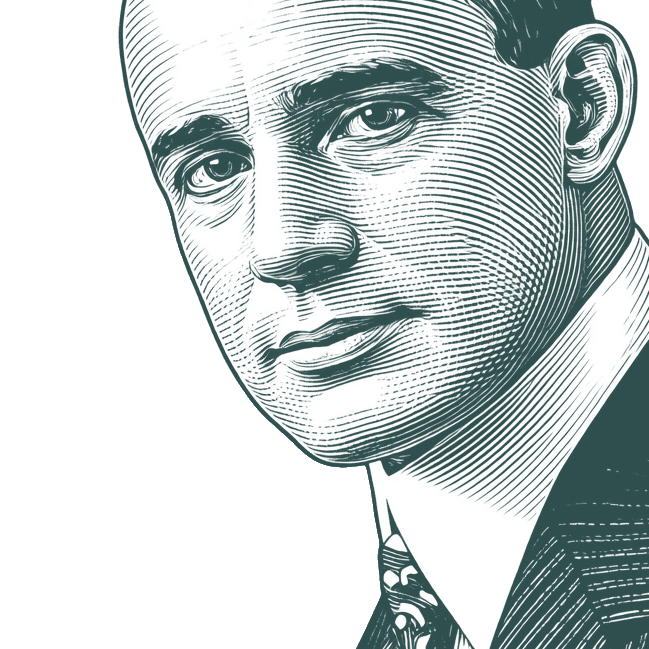
Napoleon Hill (26 October 1883 – 8 November 1970) was an American self-help author. He is best known for his book Think and Grow Rich (1937), which is among the 10 best-selling self-help books of all time. Hill's works insisted that fervid expectations are essential to improving one's life. Most of his books were promoted as expounding principles to achieve "success".
Remember that your dominating thoughts attract, through a definite law of nature, by the shortest and most convenient route, their physical counterpart. Be careful what your thoughts dwell upon.
Desire is the starting point of all achievement, not a hope, not a wish, but a keen pulsating desire which transcends everything.
Sex energy is the most powerful of all the stimuli which move people into action. Because it is the most powerful of the emotions, it must be controlled, through transmutation, and converted into other channels.