The man who is more than his chemistry, walking on the earth, turning his plow point for a stone, dropping his handles to slide over an outcropping, … - John Steinbeck
""
The man who is more than his chemistry, walking on the earth, turning his plow point for a stone, dropping his handles to slide over an outcropping, kneeling in the earth to eat his lunch; that man who is more than his elements knows the land that is more than its analysis. But the machine man, driving a dead tractor on land he does not know and love, understands only chemistry; and he is contemptuous of the land and of himself, then the corrugated iron doors are shut, he goes home, and his home is not the land.
John Ernst Steinbeck Jr. (27 February 1902 – 20 December 1968) was an American writer. A recipient of the Nobel Prize for Literature in 1962, his works include the novella Of Mice and Men (1937) and the novel The Grapes of Wrath (1939, Pulitzer Prize for Fiction, 1940), both of which examine the lives of the working class and migrant workers during the Great Depression.
Biography information from
Wikiquote·
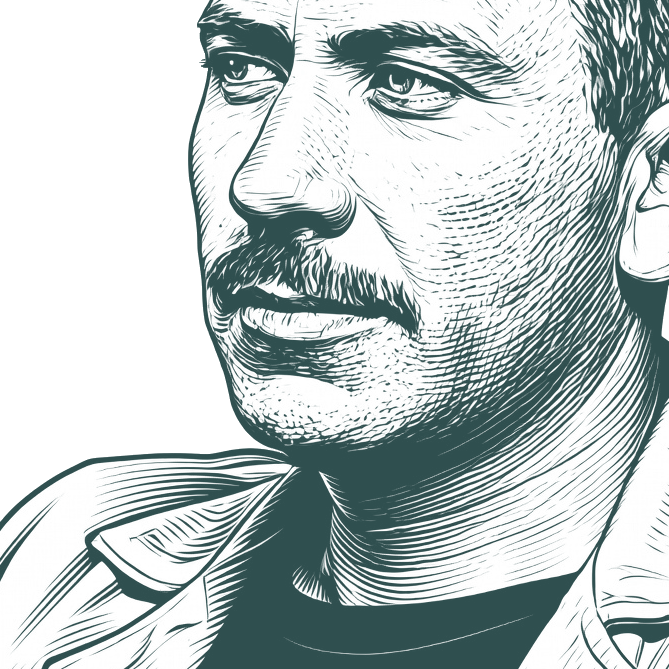
Portrait adapted from
Wikimedia Commons, McFadden Publications, Inc.; no photographer credited; photo likely the work of Sonya Noskowiak, as Steinbeck is wearing the same clothes from her 1935 studio session that produced the work shown here: https://www.si.edu/object/npg_NPG.2006.74 (Public domain / CC0)
Also Known As
Birth Name:
Jeffery Ernest Steinbeck
Alternative Names:
John Ernst Steinbeck, Jr.
•
John Ernst Steinbeck
•
John Ernest Steinbeck
•
John Ernst Steinbeck Jr
•
Steinbeck
Portrait from Wikimedia Commons. Credit: McFadden Publications, Inc.; no photographer credited; photo likely the work of Sonya Noskowiak, as Steinbeck is wearing the same clothes from her 1935 studio session that produced the work shown here: https://www.si.edu/object/npg_NPG.2006.74. Used under Public domain / CC0. Processed and styled by Quotewise.
Works in ChatGPT, Claude, or Any AI
Add semantic quote search to your AI assistant via MCP. One command setup.
...You are a little boy. You want the moon to drink from as a golden cup; and so, it is very likely that you will become a great man — if only you remain a little child. All the world'sgreat have been little boys who wanted the moon; running and climbing, they sometimes catch a firefly. But if one grow to a man's mind, that mind must see that it cannot have the moon and would not want it if it could — and so, it catches no fireflies.' [Merlin]
One of the greatest errors in the reconstruction of another era lies in our tendency to think of them as being like ourselves in feeling and attitudes. Actually, without considerable study on the part of a present-day man — if he were confronted by a fifteenth-century man — there would be no possible communication. I think it is possible through knowledge and discipline for a modern man to understand, and, to a certain extent, live into a fifteenth-century mind, but the reverse would be completely impossible.
Go Premium
Support Quotewise while enjoying an ad-free experience and premium features.