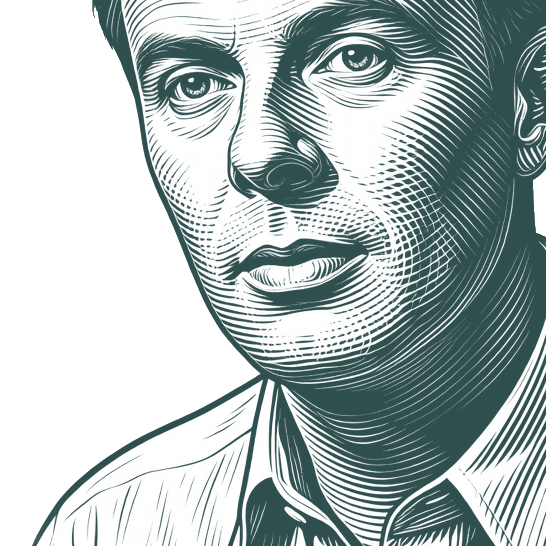
There will be in the next generation or so a pharmacological method of making people love their servitude and producing dictatorship without tears, s… - Aldous Huxley
""
There will be in the next generation or so a pharmacological method of making people love their servitude and producing dictatorship without tears, so to speak, producing a kind of painless concentration camp for entire societies so that people will in fact have their liberties taken away from them but will rather enjoy it.
Aldous Leonard Huxley (26 July 1894 – 22 November 1963) was a British author known for his novel Brave New World. He was the grandson of Thomas Henry Huxley and younger brother of Julian Huxley.
Knowledge is a function of being. When there is a change in the being of the knower, there is a corresponding change in the nature and amount of knowing.
A New Theory of Biology," was the title of the paper which Mustapha Mond had just finished reading. He sat for some time, meditatively frowning, then picked up his pen and wrote across the title-page: "The author's mathematical treatment of the conception of purpose is novel and highly ingenious, but heretical and, so far as the present social order is concerned, dangerous and potentially subversive. Not to be published." He underlined the words. "The author will be kept under supervision. His transference to the Marine Biological Station of St. Helena may become necessary." A pity, he thought, as he signed his name. It was a masterly piece of work. But once you began admitting explanations in terms of purpose — well, you didn't know what the result might be. It was the sort of idea that might easily decondition the more unsettled minds among the higher castes — make them lose their faith in happiness as the Sovereign Good and take to believing, instead, that the goal was somewhere beyond, somewhere outside the present human sphere; that the purpose of life was not the maintenance of well-being, but some intensification and refining of consciousness, some enlargement of knowledge. Which was, the Controller reflected, quite possibly true. But not, in the present circumstance, admissible.
And as I looked, it became very clear that this five-and-ten-cent ship was in some way connected with human pretensions. This suffocating interior of a dime-store ship was my own personal self; these gimcrack mobiles of tin and plastic were my personal contributions to the universe.