The shift from India to Europe as the preferred Urheimat was formally due to new linguistic insights.. but it was coincidentally also well-tuned to n… - Koenraad Elst
""
The shift from India to Europe as the preferred Urheimat was formally due to new linguistic insights.. but it was coincidentally also well-tuned to new political concerns. Apart from rising nationalism which explains the scramble among scholars to grab the Urheimat status for their own country, the main factor was European colonialism, then at its apogee. It seemed natural that the continent whose manifest destiny was the domination of the world, had also brought forth its own proto-historic Indo-European culture and language. Conversely, it seemed illogical that a backward country like India, badly in need of the White Man's civilising mission, could have brought forth the superior European culture.... In the same period, race theories conquered the intellectual scene, fitting neatly with the Europe-to-India scenario for the spread of Indo-European. It all fell into place: the Aryans had been white Nordic people who, with their inborn superiority, had developed a culture and technology which allowed them to subdue less advanced races: dark-haired Mediterraneans and West-Asians, and dark-skinned Indians. The linguistic "aryanization" of India by white Aryan invaders from Europe formed a complete case study of all that the upcoming racist worldview stood for.
English
Collect this quote
About
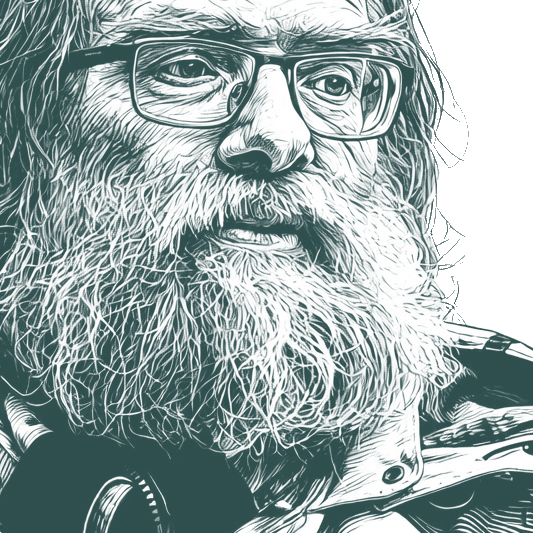
Koenraad Elst
Koenraad Elst (born 7 August 1959) is a Flemish right wing Hindutva author, known primarily for his support of the Out of India theory and the Hindutva movement. Scholars have accused him of harboring Islamophobia.
The reductionist interpretation as “nothing but” sexual symbolism is simply wrong and shows the limited framework of psycho-analysis. The smaller cannot contain the greater, and psycho-analytical models cannot grasp the vastness and complexity of Hindu cosmology.
But the solution is not to “get around these stubborn, disturbing facts” of astronomy by smugly dismissing them as testimonia non grata. Nor to declare dogmatically that “we know that it can't be correct”.
Enhance Your Quote Experience
Enjoy ad-free browsing, unlimited collections, and advanced search features with Premium.