And yet, their sound and fury was nothing but smoking mirrors, a grand tamasha of fake moralism and non-existent facts. They claimed that the science… - Koenraad Elst
""
And yet, their sound and fury was nothing but smoking mirrors, a grand tamasha of fake moralism and non-existent facts. They claimed that the science of history could not allow the restoration of a temple that had never existed. In reality, they could not muster even a single discovery that would have questioned the old pro-temple consensus. The debate that ensued was totally asymmetrical: they demanded evidence from the pro-temple site, which was duly produced, both existing proofs and extra new discoveries; while they themselves never came up with anything. Later they were summoned to Court to divulge their expert opinions, but (as documented by Prof. Meenakshi Jain in her comprehensive book on the Ayodhya evidence, Rama’s Ayodhya, 2013) one after another, they confessed to their lack of competence in the matter. So, even though the media have kept the lid on this information, the pro-temple side has won the history debate fair and square. Of course there had been a temple, and for those who still feigned to doubt it, the temple foundations were fully excavated in 2003.
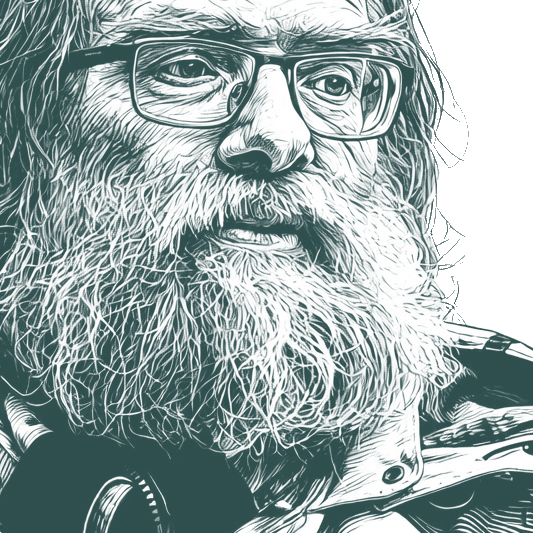
Koenraad Elst (born 7 August 1959) is a Flemish right wing Hindutva author, known primarily for his support of the Out of India theory and the Hindutva movement. Scholars have accused him of harboring Islamophobia.
That is still entirely true. Name me a single established professor who made his career all while being known as a Hindutva supporter. I, by contrast, can easily enumerate a lot of professors who have been known all along as Communist or as generally anti-Hindu and certainly anti-Hindutva, without this standing in the way of their promotions.
This raises the issue of a possible settlement with the Muslims, and the terms in which such a settlement should be formulated. But note that no secularist opinion leader in India nor any Western observer has highlighted these offers, let alone given them his explicit support. Their preference is with the most obscurantist and militant tendency in the Muslim community.
Most importantly, for the ancient period, Indian Marxist and other anti-Hindu historians posit a massive conflict (between Aryan invaders and natives) in spite of the total absence of either textual or archaeological evidence for such conflict; while for the medieval period, they wax eloquent about an idyllic “composite culture” and deny a massive conflict spanning centuries (viz. between Muslim invaders and Hindu natives), against the copiously available evidence for this conflict, both textual and archaeological. This observation is entirely correct: both ancient and medieval history have been rewritten in the sense of belittling and blackening Hindu civilization and extolling its enemies.