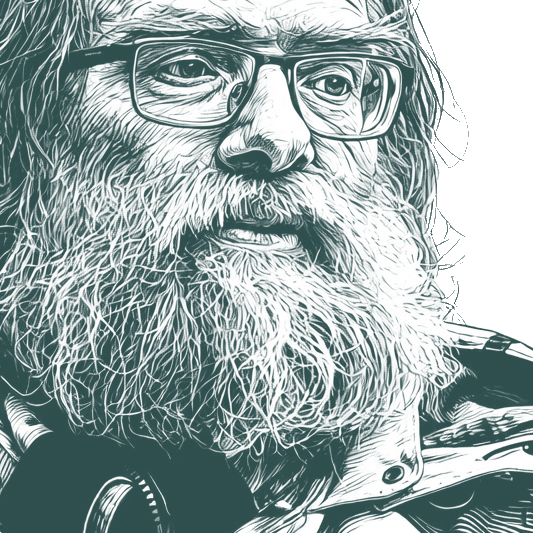
That same thing which they call fascism when they wrongly attribute it to Hindu Rashtra, is effectively accepted in the case of a Muslim Rashtra, suc… - Koenraad Elst
""
That same thing which they call fascism when they wrongly attribute it to Hindu Rashtra, is effectively accepted in the case of a Muslim Rashtra, such as Pakistan. I at least have never heard any of them refer to Pakistan as fascist. Muslim Rashtra is not only not called fascism: Mr. Engineer even seems to take it for granted as a political framework, and therefore he tries to secure a place for the Hindus in it by declaring them people of the Book, rather than just Kafirs who could not be tolerated alive. Well how generous of him... The category people of the Book is an arch-communalist notion...
English
Collect this quote
About
Koenraad Elst
Koenraad Elst (born 7 August 1959) is a Flemish right wing Hindutva author, known primarily for his support of the Out of India theory and the Hindutva movement. Scholars have accused him of harboring Islamophobia.
At least five thousand years before Akbar, this area was the habitat of Ilā, the daughter and eldest child of Manu. He in turn was the founding patriarch of mankind, or at least of a part of it. His daughter, in spite of her primogeniture, had to leave the succession to the throne to her younger brother Ikṣvāku, who stayed in the paternal capital Ayodhyā and founded the Solar dynasty. Being myself an eldest son but second child, I know how it must have felt: Ikṣvāku always looked up to his elder sister and felt a bit indebted to her. On her part, Ilā moved out to Pratiṣṭhānapura, next to the virgin land where Akbar was to build his divine city. This is where her son Purūravas founded the Lunar Dynasty. One descendant of theirs, Nahuśa, moved westwards to the Sarasvatī valley, where one of his own descendants was Yayāti, after whose five sons the “five tribes” were named. Pūru headed the central Paurava tribe. One of his progeny was Bharata, after whom India is still called Bhāratavarṣa. In his clan grew a tradition of composing hymns, and these were collected in the Vedas. Later sources describe Dīrghatamas as his court priest. The Vedic seers rightly glorified their ancestress Ilā, who became a goddess and member of a typical goddess triad: Ilā, Bhāratī and Sarasvatī.
Modi as an economic miracle-worker surely helped, but Modi as the man who has survived an unparallelled twelve-years-long onslaught by the secularists, that is what made him the Emperor of the Hindu Heart (Hindu Hrdaya Samrat).
PREMIUM FEATURE
Advanced Search Filters
Filter search results by source, date, and more with our premium search tools.
Ostensibly the hymn is from the final stage of Rig-Vedic composition, shortly before Veda-Vyasa’s final editing of the hymns into the fully-formed Vedas. It soon became the Vedic bedrock of varna doctrine and gets reproduced or quoted to that effect in younger Vedic writings, including the Atharva & Yajur Veda (so, there also interpolations?), the Panchavimsha Brahmana, Taittitiya Aranyaka, Mahabharata and Bhagavata Purana.