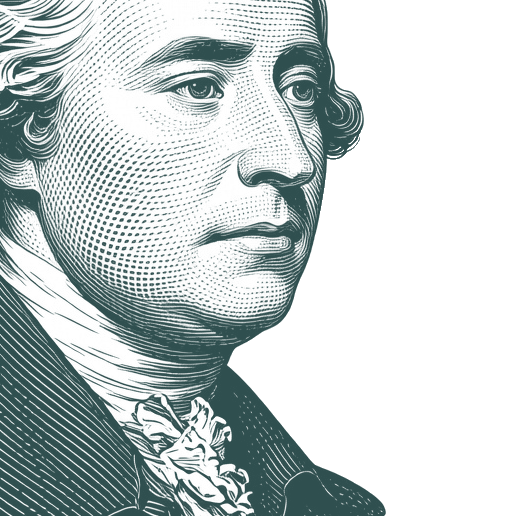
To be attached to the subdivision, to love the little platoon we belong to in society, is the first principle (the germ, as it were) of public affect… - Edmund Burke
""
To be attached to the subdivision, to love the little platoon we belong to in society, is the first principle (the germ, as it were) of public affections. It is the first link in the series by which we proceed towards a love to our country and to mankind. The interest of that portion of social arrangement is a trust in the hands of all those who compose it; and as none but bad men would justify it in abuse, none but traitors would barter it away for their own personal advantage
English
Collect this quote
About
Edmund Burke
Edmund Burke (12 January 1729 – 9 July 1797) was a British and Irish statesman and philosopher. Born in Dublin, Burke served as a member of parliament (MP) between 1766 and 1794 in the House of Commons of Great Britain with the Whig Party after moving to London in 1750.
Biography information from
Wikiquote·
Portrait adapted from
Wikimedia Commons, Joshua Reynolds (Public domain / CC0)
If you do not fall in with this motion, then secure something to fight for, consistent in theory and valuable in practice. If you must employ your strength, employ it to uphold you in some honorable right or some profitable wrong. If you are apprehensive that the concession recommended to you, though proper, should be a means of drawing on you further, but unreasonable claims, — why, then employ your force in supporting that reasonable concession against those unreasonable demands. You will employ it with more grace, with better effect, and with great probable concurrence of all the quiet and rational people in the provinces, who are now united with and hurried away by the violent, — having, indeed, different dispositions, but a common interest. If you apprehend that on a concession you shall be pushed by metaphysical process to the extreme lines, and argued out of your whole authority, my advice is this: when you have recovered your old, your strong, your tenable position, then face about, — stop short, — do nothing more, — reason not at all, — oppose the ancient policy and practice of the empire as a rampart against the speculations of innovators on both sides of the question, — and you will stand on great, manly, and sure ground. On this solid basis fix your machines, and they will draw worlds towards you.
...what the freedom is that I love, and that to which I think all men intitled. It is not solitary, unconnected, individual, selfish Liberty. As if every Man was to regulate the whole of his Conduct by his own will. The Liberty I mean is social freedom. It is that state of things in which Liberty is secured by the equality of Restraint; A Constitution of things in which the liberty of no one Man, and no body of Men and no Number of men, can find Means to trespass on the liberty of any Person, or any description of Persons in the Society. This kind of liberty is indeed but another name for Justice, as ascertained by wise Laws, and secured by well-constructed institutions.
Go Premium
Support Quotewise while enjoying an ad-free experience and premium features.
Hence it is that men are much more naturally inclined to belief than to incredulity. And it is upon this principle, that the most ignorant and barbarous nations have frequently excelled in similitudes, comparisons, metaphors, and allegories, who have been weak and backward in distinguishing and sorting their ideas. And it is for a reason of this kind, that Homer and the oriental writers, though very fond of similitudes, and though they often strike out such as are truly admirable, seldom take care to have them exact; that is, they are taken with the general resemblance, they paint it strongly, and they take no notice of the difference which may be found between the things compared.