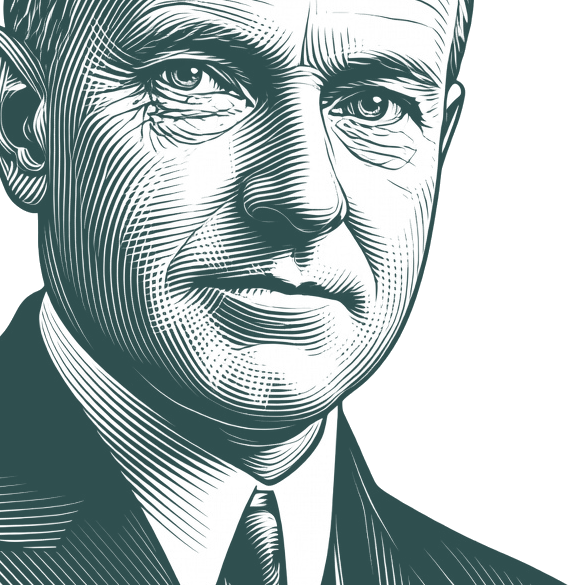
There will be other crises in the national history which will make other demands for the fullest and most unselfish contribution to the national inte… - Calvin Coolidge
""
There will be other crises in the national history which will make other demands for the fullest and most unselfish contribution to the national interest. No generation will be denied its opportunity, will be spared its duty, to put forth its best efforts. We devoutly hope that these contributions will not be demanded upon the field of battle. But they will be just as truly needed, just as urgently summoned, in the activities of peace, the efforts of industry, the performance of all the obligations of citizenship. We can not go out from this place and occasion without refreshment of faith and renewal of confidence that in every exigency our Negro fellow citizens will render the best and fullest measure of service whereof they are capable.
English
Collect this quote
About
Calvin Coolidge
John Calvin Coolidge Jr. (4 July 1872 – 5 January 1933) was the 30th president of the United States (1923–29). A Republican lawyer from Vermont, Coolidge worked his way up the ladder of Massachusetts state politics, eventually becoming governor of that state. His response to the Boston Police Strike of 1919 thrust him into the national spotlight and gave him a reputation as a man of decisive action. Soon after, he was elected as the 29th vice president in 1920 and succeeded to the presidency upon the sudden death of Warren G. Harding in 1923. Elected in his own right in 1924, he gained a reputation as a small-government conservative.
Biography information from
Wikiquote·
Portrait adapted from
Wikimedia Commons, Harris & Ewing (Public domain / CC0)
Also Known As
Birth Name:
John Calvin
Alternative Names:
John Calvin Coolidge Jr.
•
John Calvin Coolidge
•
President Coolidge
•
J. C. Coolidge
•
C. Coolidge
•
Silent Cal
•
Silent Cal Coolidge
The idea that the people have a right to choose their own rulers was not new in political history. It was the foundation of every popular attempt to depose an undesirable king. This right was set out with a good deal of detail by the Dutch when as early as July 26, 1581, they declared their independence of Philip of Spain. In their long struggle with the Stuarts the British people asserted the same principles, which finally culminated in the Bill of Rights deposing the last of that house and placing William and Mary on the throne. In each of these cases sovereignty through divine right was displaced by sovereignty through the consent of the people. Running through the same documents, though expressed in different terms, is the clear inference of inalienable rights. But we should search these charters in vain for an assertion of the doctrine of equality. This principle had not before appeared as an official political declaration of any nation. It was profoundly revolutionary. It is one of the corner stones of American institutions.
Next to him will come Thomas Jefferson, whose wisdom insured that the Government which Washington had formed should be entrusted to the administration of the people. He emphasized the element of self-government which had been enshrined in American institutions in such a way as to demonstrate that it was practical and would be permanent. In him was likewise embodied the spirit of expansion. Recognizing the destiny of this Country, he added to its territory. By removing the possibility of any powerful opposition from a neighboring state, he gave new guaranties to the rule of the people.
We do not need a large land force. The present size of our regular Army is entirely adequate, but it should continue to be supplemented by a National Guard and Reserves, and especially with the equipment and organization in our industries for furnishing supplies. When we turn to the sea the situation is different. We have not only a long coast line, distant outlying possessions, a foreign commerce unsurpassed in importance, and foreign investments unsurpassed in amount, the number of our people and value of our treasure to be protected, but we are also bound by international treaty to defend the Panama Canal. Having few fuelling stations, we require ships of large tonnage, and, having scarcely any merchant vessels capable of mounting five- or six-inch guns, it is obvious that, based on positions, we are entitled to a larger number of warships than a nation having these advantages.