"What am I coming for?" he repeated, looking straight into her eyes. "You know that I have come to be where you are," he said; "I can't help it." - Leo Tolstoy
"What am I coming for?" he repeated, looking straight into her eyes. "You know that I have come to be where you are," he said; "I can't help it."
English
Collect this quote
About
Leo Tolstoy
Lev Nikolayevitch Tolstoy [Ле́в Никола́евич Толсто́й, usually rendered Leo Tolstoy, or sometimes Tolstoi] (9 September 1828 – 20 November 1910) was a Russian writer, philosopher and social activist (social critic), whose novels War and Peace and Anna Karenina are internationally praised classics of world literature. He was a major influence on the development of Christian anarchism and pacifism, contributing to such nonviolent resistance movements as those of Mahatma Gandhi, Martin Luther King, Jr., and James Bevel.
Biography information from
Wikiquote·
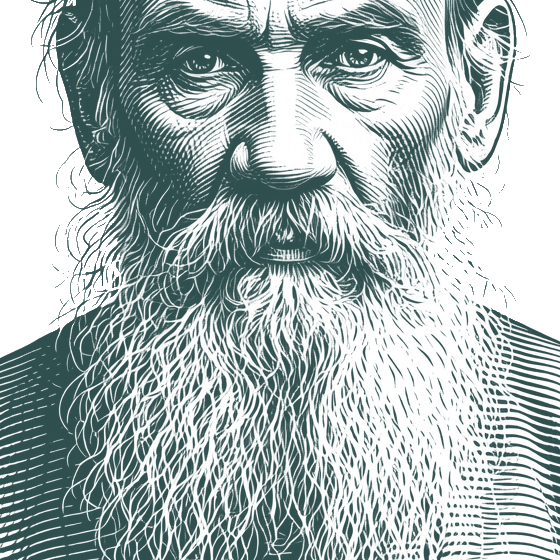
Portrait adapted from
Wikimedia Commons, Sergei Prokudin-Gorskii (Public domain / CC0)
Also Known As
Pen Names:
Л. Н. Т.
•
Л. Н.
Birth Name:
Lev Nikolayevich Tolstoy
Native Name:
Лев Никола́евич Толсто́й
Alternative Names:
Count Lev Nikolayevich Tolstoy
•
Tolstoy, Leo, graf, 1828-1910
•
Tolstoĭ, Lev Nikolaevich, graf, 1828-1910
•
Lev Nikolayevich Tolstoĭ
•
Leo Tolstoi
•
Tolstoĭ, Lev Nikolaevich, graf
•
Tolstoy, Leo, graf
The oppression of a majority by a minority, and the demoralization inevitably resulting from it, is a phenomenon that has always occupied me and has done so most particularly of late.
I already love in you your beauty, but I am only beginning to love in you that which is eternal and ever precious – your heart, your soul. Beauty one could get to know and fall in love with in one hour and cease to love it as speedily; but the soul one must learn to know. Believe me, nothing on earth is given without labour, even love, the most beautiful and natural of feelings,But the more difficult the labour and hardship, the higher the reward,”
Count Leo Tolstoi to Valeria Arsenev, his fiance. November 2, 1856
Try QuoteGPT
Chat naturally about what you need. Each answer links back to real quotes with citations.
To say that the activity of science and art helps humanity's progress, if by that activity we mean the activity which now calls itself by those names, is as though one said that the clumsy, obstructive splashing of oars in a boat moving down stream assists the boat's progress. It only hinders it... The proof of this is seen in the confession made by men of science that the achievements of the arts and sciences are inaccessible to the labouring masses on account of the unequal distribution of wealth.