After all, what is reading but a vice, like drink or venery or any other form of excessive self-indulgence? One reads to tickle and amuse one's mind;… - Aldous Huxley

" "

After all, what is reading but a vice, like drink or venery or any other form of excessive self-indulgence? One reads to tickle and amuse one's mind; one reads, above all, to prevent oneself thinking

English
Collect this quote

About Aldous Huxley

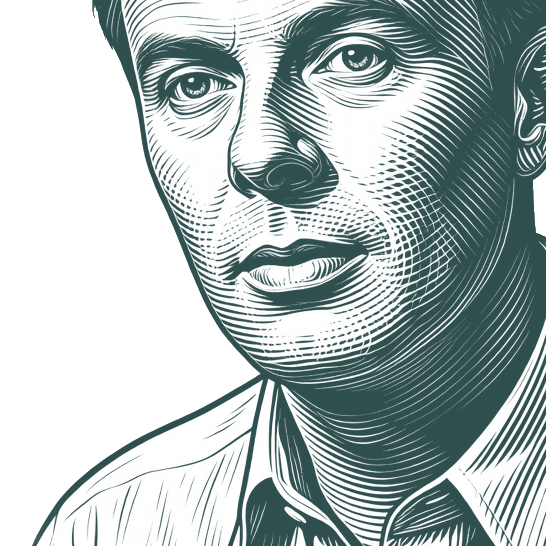
Aldous Leonard Huxley (26 July 1894 – 22 November 1963) was a British author known for his novel Brave New World. He was the grandson of Thomas Henry Huxley and younger brother of Julian Huxley.
Biography information from Wikiquote

Also Known As

Birth Name: Aldous Leonard Huxley Arnold
Alternative Names: Aldous Leonard Huxley
Works in ChatGPT, Claude, or Any AI

Add semantic quote search to your AI assistant via MCP. One command setup.

Related quotes. More quotes will automatically load as you scroll down, or you can use the load more buttons.

Additional quotes by Aldous Huxley

The soul of wit may become the very body of untruth. However elegant and memorable, brevity can never, in the nature of things, do justice to all the facts of a complex situation. On such a theme one can be brief only by omission and simplification. Omission and simplification help us to understand - but help us, in many cases, to understand the wrong thing; for our comprehension may be only of the abbreviator's neatly formulated notions, not of the vast, ramifying reality from which these notions have been so arbitrarily abstracted.

Human beings act in a great variety of irrational ways, but all of them seem to be capable, if given a fair chance, of making a reasonable choice in the light of available evidence. Democratic institutions can be made to work only if all concerned do their best to impart knowledge and to encourage rationality. But today, in the world's most powerful democracy, the politicians and the propagandists prefer to make nonsense of democratic procedures by appealing almost exclusively to the ignorance and irrationality of the electors.

A New Theory of Biology," was the title of the paper which Mustapha Mond had just finished reading. He sat for some time, meditatively frowning, then picked up his pen and wrote across the title-page: "The author's mathematical treatment of the conception of purpose is novel and highly ingenious, but heretical and, so far as the present social order is concerned, dangerous and potentially subversive. Not to be published." He underlined the words. "The author will be kept under supervision. His transference to the Marine Biological Station of St. Helena may become necessary." A pity, he thought, as he signed his name. It was a masterly piece of work. But once you began admitting explanations in terms of purpose — well, you didn't know what the result might be. It was the sort of idea that might easily decondition the more unsettled minds among the higher castes — make them lose their faith in happiness as the Sovereign Good and take to believing, instead, that the goal was somewhere beyond, somewhere outside the present human sphere; that the purpose of life was not the maintenance of well-being, but some intensification and refining of consciousness, some enlargement of knowledge. Which was, the Controller reflected, quite possibly true. But not, in the present circumstance, admissible.

Loading...