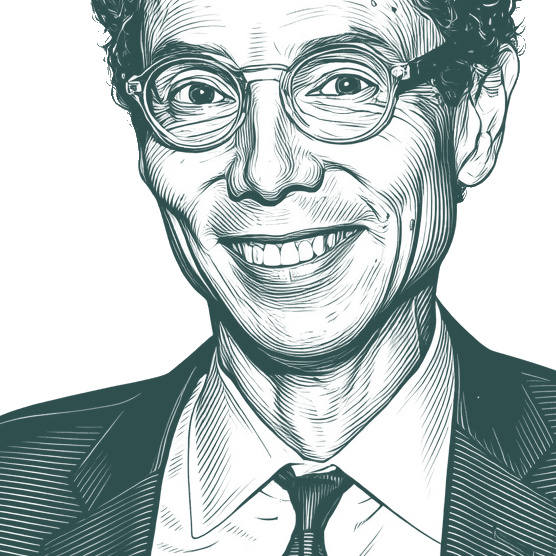
When Larry Sherman designed the Kansas City gun experiment, he was well aware of this problem. “You wouldn’t tell doctors to go out and start cutting… - Malcolm Gladwell
""
When Larry Sherman designed the Kansas City gun experiment, he was well aware of this problem. “You wouldn’t tell doctors to go out and start cutting people up to see if they’ve got bad gallbladders,” Sherman says. “You need to do lots of diagnosis first before you do any kind of dangerous procedure. And stop-and-search is a dangerous procedure. It can generate hostility to the police.” To Sherman, medicine’s Hippocratic oath — “First, do no harm” — applies equally to law enforcement. “I’ve just bought myself a marble bust of Hippocrates to try to emphasize every day when I look at it that we’ve got to minimize the harm of policing,” he went on. “We have to appreciate that everything police do, in some ways, intrudes on somebody’s liberty. And so it’s not just about putting the police in the hot spots. It’s also about having a sweet spot of just enough intrusion on liberty and not an inch — not an iota — more.
English
Collect this quote
About
Malcolm Gladwell
Malcolm Timothy Gladwell (born September 3, 1963) is an English-born Canadian journalist, bestselling author, and speaker. He has been a staff writer for The New Yorker since 1996.
Biography information from
Wikiquote·
Portrait adapted from
Wikimedia Commons, PEN American Center (CC BY)
Much of what we consider valuable in our world arises out of (these) one-sided conflicts. Because the act of facing overwhelming odds, produces greatness and beauty.
Two Dutch researchers did a study in which they had groups of students answer forty-two fairly demanding questions from the board game Trivial Pursuit. Half were asked to take five minutes beforehand to think about what it would mean to be a professor and write down everything that came to mind. Those students got 55.6 percent of the questions right. The other half of the students were asked to first sit and think about soccer hooligans. They ended up getting 42.6 percent of the Trivial Pursuit questions right. The “professor” group didn’t know more than the “soccer hooligan” group. They weren’t smarter or more focused or more serious. They were simply in a “smart” frame of mind, and, clearly, associating themselves with the idea of something smart, like a professor, made it a lot easier — in that stressful instant after a trivia question was asked — to blurt out the right answer.
Try QuoteGPT
Chat naturally about what you need. Each answer links back to real quotes with citations.
Somewhere in retirement, Haywood Hansell saw that announcement in the newspaper, and I’m sure he wondered why he didn’t get an award as well for the effort he put toward fighting a war with as few civilian casualties as possible. But we don’t give prizes to people who fail at their given tasks, no matter how noble their intentions, do we? To the victor go the spoils.