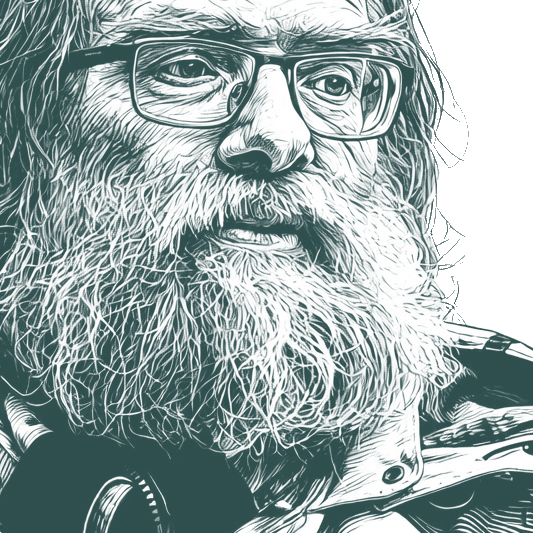
More fundamentally, the concept of "minority" is reprehensible in itself. Every democrat can understand that the law should equally apply to all, reg… - Koenraad Elst
""
More fundamentally, the concept of "minority" is reprehensible in itself. Every democrat can understand that the law should equally apply to all, regardless of religion. Every Indian citizen may sociologically be a member of one or more communities, but legally, he is just an Indian citizen. That is the minimum for a state to be secular. India today is not a secular state at all. An Indian political analyst or a foreign India-watcher outs himself as incompetent when he asserts or implies: "India is a secular state." It is not.
Koenraad Elst (born 7 August 1959) is a Flemish right wing Hindutva author, known primarily for his support of the Out of India theory and the Hindutva movement. Scholars have accused him of harboring Islamophobia.
Being placed on a high pedestal is central to both strategies. Criticism also evokes a similar reaction in both sides – they quickly declare themselves as misunderstood heroes and martyrs, and stir up their legion of followers. Doniger and Pollock have inspired an army of activist-academicians who sign petitions to keep ‘dangerous’ Indian leaders and intellectuals out of American universities and even American soil”: Subramanian Swamy, Narendra Modi, and in similar controversies Rajiv Malhotra, the Dharma Civilization Foundation and others. Indeed, the Indological community’s touching (occasional) concern for freedom of speech is not erga omnes.
When negationists are confronted with the evidence of persecutions by Islam, they are sure to mention a few cases where Muslim rulers patronized the building of Hindu temples. In some cases this is deceitful: in the JNU historians' pamphlet "The Political Abuse of History", they mention three such cases, but on closer inspection two of them do not concern Muslim rulers, but their Hindu ministers (in his rebuttal, Prof. A.R. Khan called this "not only concealment of evidence but also distortion of evidence"). But all right, a few Muslim rulers have made gifts to Hindu institutions. The negationists insist that these few gifts make up for the systematic Islamic persecutions. By contrast, their blatantly unequal standards do not allow them to accept the systematic patronage of the institutions of Buddhists and Jains by Hindu kings through the ages as compensation for the few isolated and aberrant cases of religious conflict.
Rather, the Iranian division of society has a similar origin as the same division in Indian society. The Iranians came from India, as Shrikant Talageri has convincingly demonstrated. Moreover, the division is a natural one, present in every society. It may be tempting to push responsibility far from you, preferably to a foreign source, but in this case the Iranian option doesn’t fulfil your wish. Their status of “foreigner” is ambiguous, given that they came from India and are one of the “five peoples” alongside the Vedic tribe, deemed to descend from the two brothers Anu c.q. Puru, two of the five sons of Yayati. Iranians are quite present in the Veda, such as through the sages Bhrigu and Cyavana.