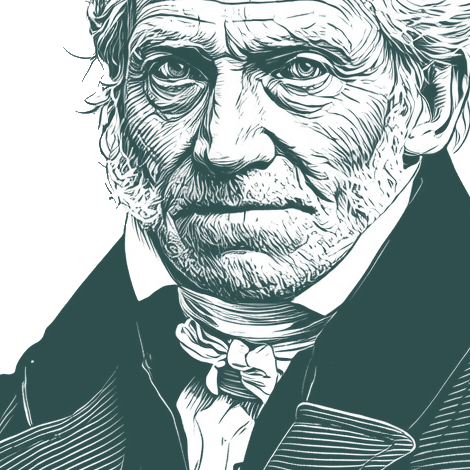
Was nun andrerseits die Menschen gesellig macht, ist ihre Unfähigkeit, die Einsamkeit und in dieser sich selbst zu ertragen. - Arthur Schopenhauer
""
Was nun andrerseits die Menschen gesellig macht, ist ihre Unfähigkeit, die Einsamkeit und in dieser sich selbst zu ertragen.
German
Collect this quote
About
Arthur Schopenhauer
Arthur Schopenhauer (22 February 1788 – 21 September 1860) was a German philosopher, most famous for his work The World as Will and Representation (1819).
Biography information from
Wikiquote·
Portrait adapted from
Wikimedia Commons, Johann Schäfer (Public domain / CC0)
There is one thing that, more than any other, throws people absolutely off their balance — the thought that you are dependent upon them. This is sure to produce an insolent and domineering manner towards you. There are some people, indeed, who become rude if you enter into any kind of relation with them; for instance, if you have occasion to converse with them frequently upon confidential matters, they soon come to fancy that they can take liberties with you, and so they try and transgress the laws of politeness. This is why there are so few with whom you care to become more intimate, and why you should avoid familiarity with vulgar people. If a man comes to think that I am more dependent upon him than he is upon me, he at once feels as though I had stolen something from him; and his endeavor will be to have his vengeance and get it back. The only way to attain superiority in dealing with men, is to let it be seen that you are independent of them.