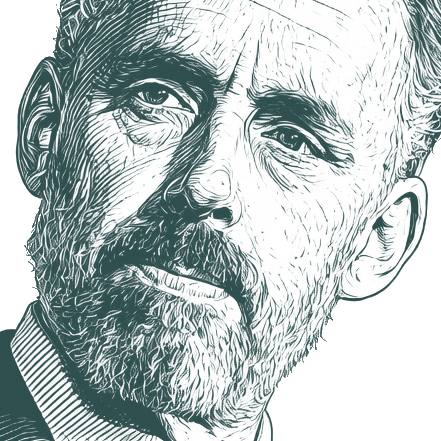
We deserve some respect. You deserve some respect. You are important to other people, as much as to yourself. You have some vital role to play in the… - Jordan Peterson
""
We deserve some respect. You deserve some respect. You are important to other people, as much as to yourself. You have some vital role to play in the unfolding destiny of the world. You are, therefore, morally obliged to take care of yourself. You should take care of, help and be good to yourself the same way you would take care of, help and be good to someone you loved and valued. You may therefore have to conduct yourself habitually in a manner that allows you some respect for your own Being — and fair enough. But every person is deeply flawed. Everyone falls short of the glory of God. If that stark fact meant, however, that we had no responsibility to care, for ourselves as much as others, everyone would be brutally punished all the time. That would not be good. That would make the shortcomings of the world, which can make everyone who thinks honestly question the very propriety of the world, worse in every way. That simply cannot be the proper path forward.
Jordan Bernt Peterson (born June 12, 1962) is a Canadian clinical psychologist at the University of Toronto. He is the author of Maps of Meaning: The Architecture of Belief (1999), 12 Rules for Life: An Antidote to Chaos (2017), Beyond Order: 12 More Rules for Life (2021) and We Who Wrestle With God (2024)
A naively formulated goal transmutes, with time, into the sinister form of the life-lie. One forty-something client told me his vision, formulated by his younger self: “I see myself retired, sitting on a tropical beach, drinking margaritas in the sunshine.” That’s not a plan. That’s a travel poster. After eight margaritas, you’re fit only to await the hangover. After three weeks of margarita-filled days, if you have any sense, you’re bored stiff and self-disgusted. In a year, or less, you’re pathetic. It’s just not a sustainable approach to later life. This kind of oversimplification and falsification is particularly typical of ideologues. They adopt a single axiom: government is bad, immigration is bad, capitalism is bad, patriarchy is bad. Then they filter and screen their experiences and insist ever more narrowly that everything can be explained by that axiom. They believe, narcissistically, underneath all that bad theory, that the world could be put right, if only they held the controls.