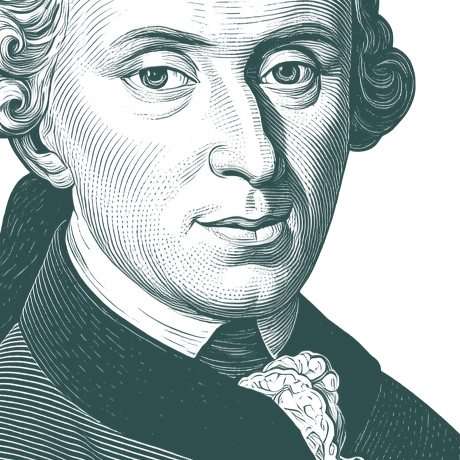
Aufklärung ist der Ausgang des Menschen aus seiner selbst verschuldeten Unmündigkeit. Unmündigkeit ist das Unvermögen, sich seines Verstandes ohne Le… - Immanuel Kant
""
Aufklärung ist der Ausgang des Menschen aus seiner selbst verschuldeten Unmündigkeit. Unmündigkeit ist das Unvermögen, sich seines Verstandes ohne Leitung eines anderen zu bedienen. Selbstverschuldet ist diese Unmündigkeit, wenn die Ursache derselben nicht am Mangel des Verstandes, sondern der Entschließung und des Mutes liegt, sich seiner ohne Leitung eines anderen zu bedienen. Sapere aude! Habe Mut dich deines eigenen Verstandes zu bedienen! ist also der Wahlspruch der Aufklärung.
Related quotes. More quotes will automatically load as you scroll down, or you can use the load more buttons.
Shorter versions of this quote
Aufklärung ist der Ausgang des Menschen aus seiner selbstverschuldeten Unmündigkeit. Unmündigkeit ist das Unvermögen, sich seines Verstandes ohne Leitung eines anderen zu bedienen.
He [Jesus] combines all duties (1) in one universal rule (which includes within itself both the inner and the outer moral relations of men), namely: Perform your duty for no motive other than unconditioned esteem for duty itself, i.e., love God (the Legislator of all duties) above all else; and (2) in a particular rule, that, namely, which concerns man’s external relation to other men as universal duty: Love every one as yourself, i.e., further his welfare from good-will that is immediate and not derived from motives of self-advantage. These commands are not mere laws of virtue but precepts of holiness which we ought to pursue, and the very pursuit of them is called virtue. Accordingly he destroys the hope of all who intend to wait upon this moral goodness quite passively, with their hands in their laps, as though it were a heavenly gift which descends from on high. He who leaves unused the natural predisposition to goodness which lies in human nature (like a talent entrusted to him) in lazy confidence that a higher moral influence will no doubt supply the moral character and completeness which he lacks, is confronted with the threat that even the good which, by virtue of his natural predisposition, he may have done, will not be allowed to stand him in stead because of this neglect (XXV, 29).
If I have a book that thinks for me, a pastor who acts as my conscience, a physician who prescribes my diet, and so on... then I have no need to exert myself. I have no need to think, if only I can pay; others will take care of that disagreeable business for me.
Works in ChatGPT, Claude, or Any AI
Add semantic quote search to your AI assistant via MCP. One command setup.
...We find that the more a cultivated reason applies itself with deliberate purpose to the enjoyment of life and happiness, so much the more does the man fail of true satisfaction... even from the sciences... they find that they have, in fact, only brought more trouble on their shoulders rather than gained in happiness; and they end by envying rather than despising the more common stamp of men who keep closer to the guidance of mere instinct, and do not allow their reason much influence on their conduct... [T]here lies at the root of these judgments the idea that our existence has a different and far nobler end, for which, and not for happiness, reason is properly intended...