It is the property of every Hero, in every time, in every place and situation, that he come back to reality; that he stand upon things, and not shows… - Thomas Carlyle
""
It is the property of every Hero, in every time, in every place and situation, that he come back to reality; that he stand upon things, and not shows of things. According as he loves, and venerates, articulately or with deep speechless thought, the awful realities of things, so will the hollow shows of things, however regular, decorous, accredited by Koreishes or Conclaves, be intolerable and detestable to him.
English
Collect this quote
About
Thomas Carlyle
Thomas Carlyle (December 4 1795 – February 5 1881) was a Scottish essayist, historian and philosopher of great prominence during the Victorian era. His wife was Jane Welsh Carlyle.
Biography information from
Wikiquote·
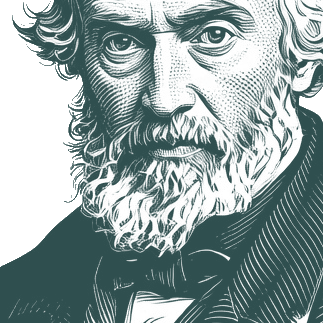
Portrait adapted from
Wikimedia Commons, Sir John Everett Millais, 1st Bt (died 1896) (Public domain / CC0)
Portrait from Wikimedia Commons. Credit: Sir John Everett Millais, 1st Bt (died 1896). Used under Public domain / CC0. Processed and styled by Quotewise.
Works in ChatGPT, Claude, or Any AI
Add semantic quote search to your AI assistant via MCP. One command setup.
Mahomet was only fourteen; had no language but his own: much in Syria must have been a strange unintelligible whirlpool to him. But the eyes of the lad were open; glimpses of many things would doubtless be taken in, and lie very enigmatic as yet, which were to ripen in a strange way into views, into beliefs and insights one day. These journeys to Syria were probably the beginning of much to Mahomet. One other circumstance we must not forget: that he had no school-learning; of the thing we call school-learning none at all.
Medicine, guarded too by preliminary impediments, and frightful medusa-heads of quackery, which deter many generous souls from entering, is of the half-articulate professions, and does not much invite the ardent kinds of ambition. The intellect required for medicine might be wholly human, and indeed should by all rules be,—the profession of the Human Healer being radically a sacred one and connected with the highest priesthoods, or rather being itself the outcome and acme of all priesthoods, and divinest conquests of intellect here below. As will appear one day, when men take off their old monastic and ecclesiastic spectacles, and look with eyes again! In essence the Physician's task is always heroic, eminently human: but in practice most unluckily at present we find it too become in good part beaverish,—yielding a money-result alone. And what of it is not beaverish,—does not that too go mainly to ingenious talking, publishing of yourself, ingratiating of yourself; a partly human exercise or waste of intellect, and, alas, a partly vulpine ditto;—making the once sacred... Human Healer, more impossible for us than ever!
Limited Time Offer
Premium members can get their quote collection automatically imported into their Quotewise collections.
At bottom, it is the Poet's first gift, as it is all men's, that he have intellect enough. He will be a Poet if he have: a Poet in word; or failing that, perhaps still better, a Poet in act. Whether he write at all; and if so, whether in prose or in verse, will depend on accidents: who knows on what extremely trivial accidents, — perhaps on his having had a singing-master, on his being taught to sing in his boyhood! But the faculty which enables him to discern the inner heart of things, and the harmony that dwells there (for whatsoever exists has a harmony in the heart of it, or it would not hold together and exist), is not the result of habits or accidents, but the gift of Nature herself; the primary outfit for a Heroic Man in what sort soever. To the Poet, as to every other, we say first of all, See. If you cannot do that, it is of no use to keep stringing rhymes together, jingling sensibilities against each other, and name yourself a Poet; there is no hope for you. If you can, there is, in prose or verse, in action or speculation, all manner of hope. The crabbed old Schoolmaster used to ask, when they brought him a new pupil, 'But are ye sure he's not a dunce?' Why, really one might ask the same thing, in regard to every man proposed for whatsoever function; and consider it as the one inquiry needful: Are ye sure he's.