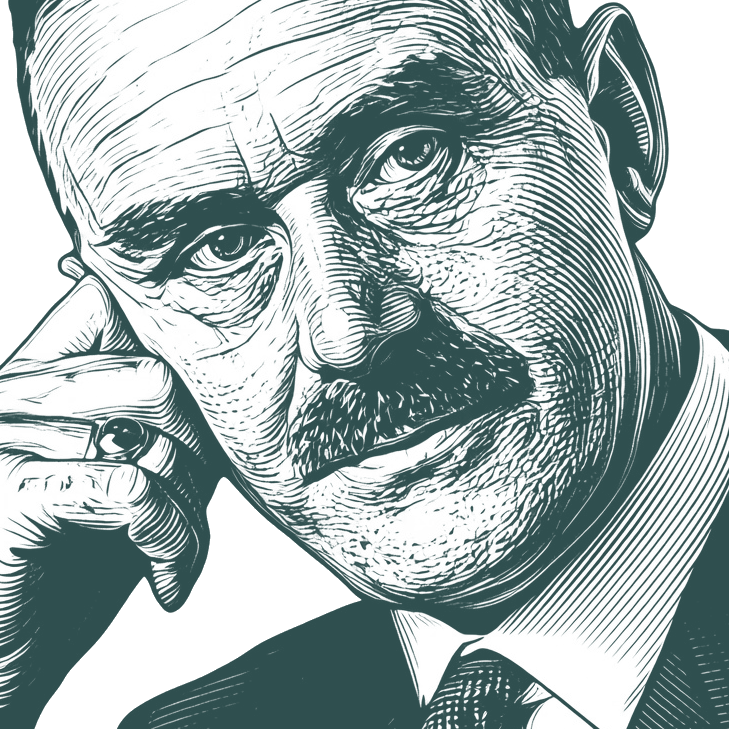
To become conscious means to acquire conscience, means the knowledge of what is good and what is evil. Nature that is infra-human does not know this … - Thomas Mann
""
To become conscious means to acquire conscience, means the knowledge of what is good and what is evil. Nature that is infra-human does not know this difference. It is without guilt. In humanity nature becomes responsible. Man is nature’s fall from grace, only it is not a fall, but just as positively an elevation as conscience is higher than innocence. What Christianity calls “ original sin ” is more than priestly trickery designed to suppress and control humanity — it is the deep feeling of man as a spiritual being for his natural infirmities and limitations, above which he raises himself through spirit. Is that infidelity to nature? By no means. It is according to nature’s deepest intent. Because it is for its own spiritualization that nature produced mankind.
Paul Thomas Mann (6 June 1875 – 12 August 1955) was a German novelist, short story writer, social critic, philanthropist, essayist, and 1929 Nobel Prize laureate, known for his series of highly symbolic and ironic epic novels and mid-length stories, noted for their insight into the psychology of the artist and the intellectual.
Biography information from
Wikiquote·
Portrait adapted from
Wikimedia Commons, Nobel Foundation (Public domain / CC0)
Order and simplification are the first steps toward the mastery of a subject — the actual enemy is the unknown.
Was wir Trauer nennen, ist vielleicht nicht sowohl der Schmerz über die Unmöglichkeit, unsere Toten ins Leben kehren zu sehen, als darüber, dies gar nicht wünschen zu können.