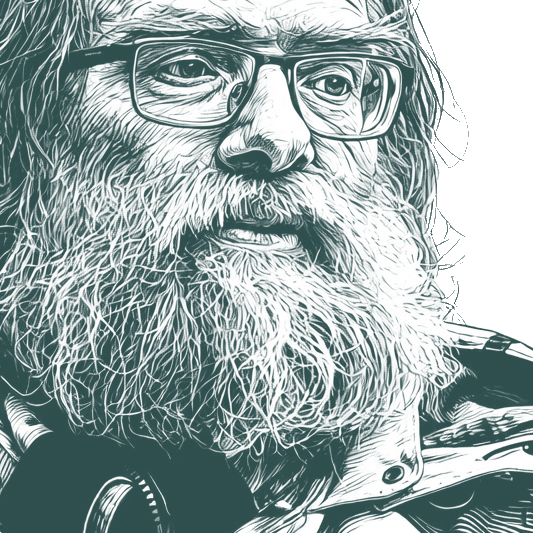
This “bullying” had best been compared to the “bullying” on the other side. Like, for instance, the two attempts by Leftist students to silence me, a… - Koenraad Elst
""
This “bullying” had best been compared to the “bullying” on the other side. Like, for instance, the two attempts by Leftist students to silence me, as a twice scheduled speaker, at the Madison WI South Asia Conference in 1996 and a private event preceding it, hosted by Prof. Andrew Sihler. Or the successful protests against the Dharma Civilization Foundation’s offer to fund a chair at UC Irvine, when so many US chairs are comfortably being funded by the Saudis. ... * I myself have been barred from several Indologist forums by active intervention or passive complicity of the same Professors who otherwise clamour “censorship!” when anything at all happens to a book they favour. ... But when I appealed to them to intervene for annulling my banning from the Religion in South Asia (RISA) list, which had been done in violation of its own charter, they all looked the other way. ... A recent example. In 2014, I read a paper on the Rg-Vedic seer Vasishtha and his relative divinization in a panel on “divinization” at the European Conference for South Asia Studies in Zürich. My paper was enthusiastically received, also by the panel’s organizers when I sent in the final version for publication. First they accepted it, but then, I received an embarrassed e-mail from the organizers stating that they could not include my paper, without any reason given. Upon my enquiring, the half-line reply said that it did not fit their project. In all its insignificance, this still managed to be a blatant lie, and their earlier acceptance confirmed that this could not have been the reason. But some higher up had warned them that I am to be treated as excluded, just like on many other occasions. ... Far more seriously, both in America and in India, scholars suspected of pro-Hindu sympathies are blocked in their access to academe, and their work gets studiously ignored. For India, a tip of the blanket over this hushed-up phenomenon was lifted by Dr. A. Devahuti: Bias in Indian Historiography (1980). It is seriously in need of an update, but I am given to understand that one is forthcoming. For America, a start was made by Rajiv Malhotra with his books Invading the Sacred (2007) and Academic Hinduphobia (2016). ... Anyway, she calls “alleged Hinduphobia” nothing more than “a strawman stand-in for any idea that undercuts Hindutva ideology”. The term was made popular by Rajiv Malhotra, whom I have never known to swear by “Hindutva”, a specific term literally translated as “Hindu-ness” but now effectively meaning “the RSS tradition of Hindu Nationalism”. At any rate, one does not have to follow Hindutva, or even be a Hindu or an Indian, to observe that American India-watchers utter a strong anti-Hindu prejudice in their publications. Not to look too far, I can find an example in myself: I have written a number of publications criticizing both Hindutva as an ideology and the Hindutva organizations, yet I can off-hand enumerate dozens of illustrations of Hindu-baiting by supposed India experts in the West as well as by their Indian counterparts.
English
Collect this quote
About
Koenraad Elst
Koenraad Elst (born 7 August 1959) is a Flemish right wing Hindutva author, known primarily for his support of the Out of India theory and the Hindutva movement. Scholars have accused him of harboring Islamophobia.
It is quite certain that some of these Austronesians must have landed in India, some on their way to Madagascar, some to stay and mix with the natives. Hence the presence of some Austronesian words in Indian languages of all families, most prominently ayi/bayi, "mother" (as in the Marathi girls' names Tarabai, Lakshmi-bai etc.), or words for "bamboo", "fruit", "honey". More spectacularly, linguists like Isidore Dyen have discerned a considerable common vocabulary in the core lexicon of Austronesian and Indo-European, including pronouns, numerals (e.g. Malay dva, "two") and terms for the elements. Oppenheimer doesn't go into this question, but diehard invasionists might use his findings to suggest an Aryan invasion into India not from the northwest, but from the southeast.
In India, the negationists have managed what European negationists can only dream of: turn the tables on honest historians and marginalize them. People who have specialized in adapting history to the party-line, are lecturing others about the political abuse of history. By contrast, genuine historians who have refused to tamper with the record of Islam (like Jadunath Sarkar, R.C. Majumdar, K.S. Lal) are held us as examples of communalist historywriting in textbooks which are required reading in all history departments in India.
Unlimited Quote Collections
Organize your favorite quotes without limits. Create themed collections for every occasion with Premium.
When Europeans first thought up the AIT around 1820 (after having espoused the OIT for half a century) and then took it to India, many Indians simply denied that anyone had come from anywhere, and pointed out correctly that nothing amounting to what is known as the Aryan invasion (with the importation of Sanskrit from outside) is described in scripture... Both Sanskrit professor Nicholas Kazanas (Athens) and myself have many anecdotes up our sleeves of how any Homeland debate in which the OIT figures, is being stonewalled by AIT-leaning linguists... Then again, this genocide does exist, viz. as part of the Dravidianist mythology, especially in its missionary version, because of overcompensation for the real genocide of natives in the Americas that accompanied their Christianization. (Ch. 30)