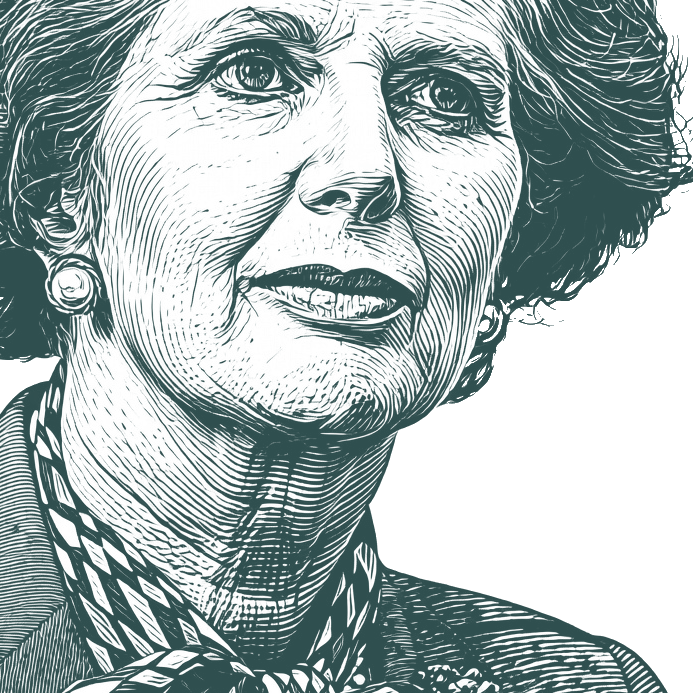
We had to fight the enemy without in the Falklands and now we have to fight the enemy within, which is much more difficult but just as dangerous to l… - Margaret Thatcher
""
We had to fight the enemy without in the Falklands and now we have to fight the enemy within, which is much more difficult but just as dangerous to liberty.
English
Collect this quote
About
Margaret Thatcher
Margaret Hilda Thatcher, Baroness Thatcher (13 October 1925 – 8 April 2013) was a British politician and stateswoman who served as Prime Minister of the United Kingdom from 1979 to 1990 and Leader of the Conservative Party from 1975 to 1990. She was the first female British prime minister and the longest-serving British prime minister of the 20th century. As prime minister, she implemented neoliberal economic policies of deregulation and privatization that became known as Thatcherism. A Soviet journalist dubbed her the "Iron Lady", a nickname that became associated with her uncompromising politics and leadership style.
Biography information from
Wikiquote·
Portrait adapted from
Wikimedia Commons, Rob Bogaerts (Public domain / CC0)
Also Known As
Birth Name:
Margaret Hilda Roberts
Alternative Names:
Baroness Thatcher
•
Margaret Hilda Thatcher
•
Margaret Roberts
•
Maggie Thatcher
•
Baroness Margaret Thatcher
•
Lady Thatcher
•
Mrs. Thatcher
•
Mrs. T
•
Baroness Thatcher of Kesteven
The Russians are bent on world dominance, and they are rapidly acquiring the means to become the most powerful imperial nation the world has seen. The men in the Soviet Politburo do not have to worry about the ebb and flow of public opinion. They put guns before butter, while we put just about everything before guns.
The restoration of the confidence of a great nation is a massive task. We do not shrink from it. It will not be given to this generation of our countrymen to create a great Empire. But it is given to us to demand an end to decline and to make a stand against what Churchill described as the “long dismal drawling tides of drift and surrender, of wrong measurements and feeble impulses”. Though less powerful than once we were, we have friends in every quarter of the globe, who will rejoice at our recovery, welcome the revival of our influence, and benefit from the message and from the example of our renewal.
Try QuoteGPT
Chat naturally about what you need. Each answer links back to real quotes with citations.
The choice facing the nation is between two totally different ways of life. And what a prize we have to fight for: no less than the chance to banish from our land the dark, divisive clouds of Marxist socialism and bring together men and women from all walks of life who share a belief in freedom.