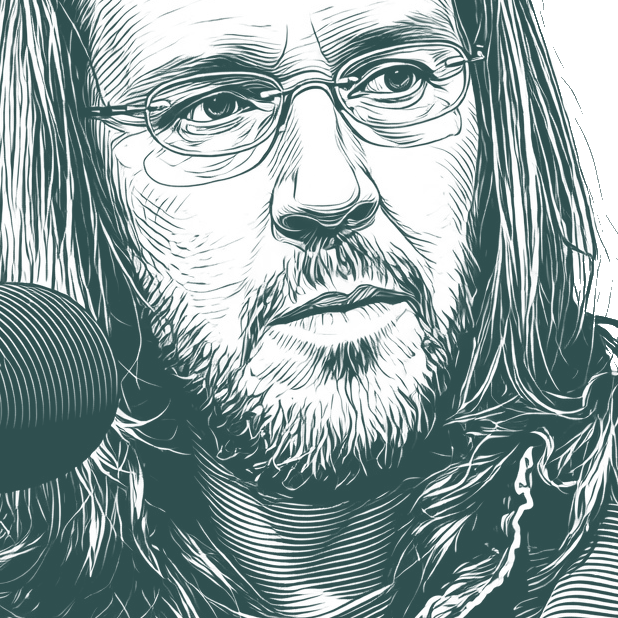
That having sex with someone you do not care for feels lonelier than not having sex in the first place, afterward.
That it is permissible to want.
Th… - David Foster Wallace
""
That having sex with someone you do not care for feels lonelier than not having sex in the first place, afterward. That it is permissible to want. That everybody is identical in their secret unspoken belief that way deep down they are different from everyone else. That this isn't necessarily perverse. That there might not be angels, but there are people who might as well be angels. That God — unless you're Charlton Heston, or unhinged, or both — speaks and acts entirely through the vehicle of human beings, if there is a God. That God might regard the issue of whether you believe there's a God or not as fairly low on his/her/its list of things s/he/it's interested in re you.
David Foster Wallace (21 February 1962 – 12 September 2008) was an American novelist, essayist, and short story writer. His works include The Broom of the System (novel), Infinite Jest (novel), The Girl With Curious Hair (short story collection), Brief Interviews with Hideous Men (short story collection), A Supposedly Fun Thing I'll Never Do Again (essay collection), and the posthumously-published The Pale King (novel) and Both Flesh and Not (essay collection).
Related quotes. More quotes will automatically load as you scroll down, or you can use the load more buttons.
Shorter versions of this quote
Everybody is identical in their secret unspoken belief that way deep down they are different from everyone else.
That everyone is identical in their secret unspoken belief that way deep down they are different from everyone else. That this isn't necessarily perverse.
The truth is that the heroism of your childhood entertainments was not true valor. It was theatre. The grand gesture, the moment of choice, the mortal danger, the external foe, the climactic battle whose outcome resolves all — all designed to appear heroic, to excite and gratify and audience. Gentlemen, welcome to the world of reality — there is no audience. No one to applaud, to admire. No one to see you. Do you understand? Here is the truth — actual heroism receives no ovation, entertains no one. No one queues up to see it. No one is interested.
I'm not saying that television is vulgar and dumb because the people who compose the Audience are vulgar and dumb. Television is the way it is simply because people tend to be extremely similar in their vulgar and prurient and dumb interests and wildly different in their refined and aesthetic and noble interests.
Works in ChatGPT, Claude, or Any AI
Add semantic quote search to your AI assistant via MCP. One command setup.
Maybe it's the fact the most of the arts here are produced by world-weary and sophisticated older people and then consumed by younger people who not only consume art but study it for clues on how to be cool, hip - and keep in mind that, for kids and younger people, to be hip and cool is the same as to be admired and accepted and included and so Unalone. Forget so-called peer-pressure. It's more like peer-hunger. No? We enter a spiritual puberty where we snap to the fact that the great transcendant horror is loneliness, excluded encagement in the self. Once we've hit this age, we will now give or take anything, wear any mask, to fit, be part-of, not be Alone, we young. The U.S. arts are our guide to inclusion. A how-to. We are shown how to fashion masks of ennui and jaded irony at a young age where the face is fictile enough to assume the shape of whatever it wears. And then it's stuck there, the weary cynicism that saves us from gooey sentiment and unsophisticated naivete.