One thing I know beyond doubt. Had [Babbage] overheard someone he respected praise him highly it would have sweetened life for him for more than a da… - Eric Hoffer
""
One thing I know beyond doubt. Had [Babbage] overheard someone he respected praise him highly it would have sweetened life for him for more than a day. We are starved for praise. It reconciles us with life. . . . Self-doubt is at the core of our being. We need people who by their attitude and words will convince us that we are not as bad as we think we are. Hence the vital role of judicious praise.
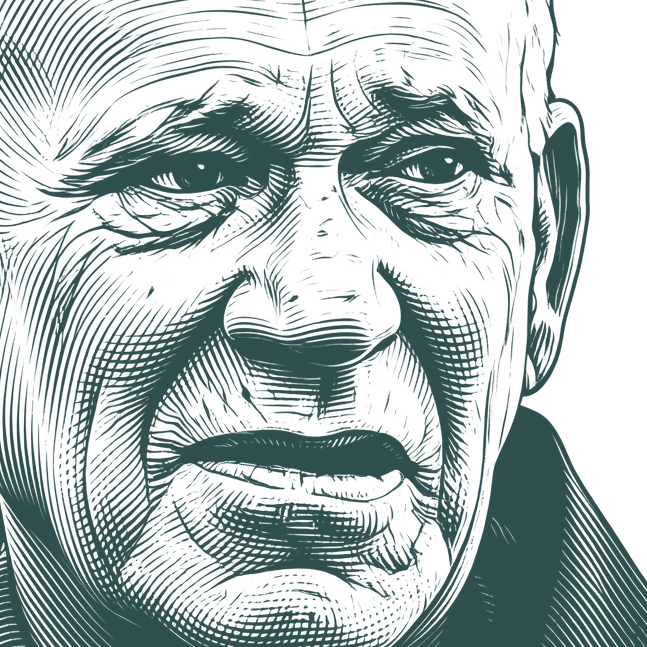
Eric Hoffer (25 July 1902 – 21 May 1983) was an American writer on social and political philosophy. His first book, The True Believer: Thoughts On The Nature Of Mass Movements (1951) is widely recognized as a classic on mass-movements and the psychological roots of fanaticism. Despite rising to fame with the success and popularity of his writings, he continued to work as a longshoreman until retiring at age 65.
Biography information from
Wikiquote·
Portrait adapted from
Wikimedia Commons, White House of the President of the United States; uploaded to YouTube by TheLBJLibrary (Public domain / CC0)
Portrait from Wikimedia Commons. Credit: White House of the President of the United States; uploaded to YouTube by TheLBJLibrary. Used under Public domain / CC0. Processed and styled by Quotewise.
Enhance Your Quote Experience
Enjoy ad-free browsing, unlimited collections, and advanced search features with Premium.
It is futile to judge the viability of a new movement by the truth of its doctrine and the feasibility of its promises. What has to be judged is its corporate organization for quick and total absorption of the frustrated. Where new creeds vie with each other for the allegiance of the populace, the one which comes with the most perfected collective framework wins.
The conservatism of a religion - it's orthodoxy - is the inert coagulum of a once highly reactive sap.
Try QuoteGPT
Chat naturally about what you need. Each answer links back to real quotes with citations.
Poverty when coupled with creativeness is usually free of frustration. This is true of the poor artisan skilled in his trade and of the poor writer, artist and scientist in the full possession of creative powers. Nothing so bolsters our self-confidence and reconciles us with ourselves as the continuous ability to create; to see things grow and develop under our hand, day in, day out. The decline of handicrafts in modern times is perhaps one of the causes for the rise of frustration and the increased susceptibility of the individual to mass movements.