La fantascienza può essere più divertente (e forse più utile) quando sfida i nostri più radicati convincimenti. E questo è ugualmente vero anche per … - Isaac Asimov
""
La fantascienza può essere più divertente (e forse più utile) quando sfida i nostri più radicati convincimenti. E questo è ugualmente vero anche per la più lineare ipotesi scientifica. Perfino quando la sfida è condannata all'insuccesso (e a mio avviso la sfida di questa storia è condannata in tal senso) o quando sono i progressi scientifici a dimostrare nell'arco di pochi anni la sua insussistenza, è probabile che la storia non perda il suo interesse. Così, per esempio, io stesso una volta ho scritto una storia in cui ipotizzavo che la Luna fosse soltanto una falsa facciata e che sull'altro lato vi fossero soltanto dei sostegni di legno. Ma nel giro di pochi anni l'altro lato della Luna fu fotografato e risultò che il nostro satellite, dopotutto, non era affatto una quinta di legno e cartapesta. Ma a chi può importare, questo? È assai probabile che chiunque legga la storia dimentichi, invece, le ipotesi sballate e la gusti come tale.
Isaac Asimov (c. 2 January 1920 – 6 April 1992) was a Russian-born American biochemist who was a prolific writer of both fiction and non-fiction, his works include the Foundation series and I, Robot.
Biography information from
Wikiquote·
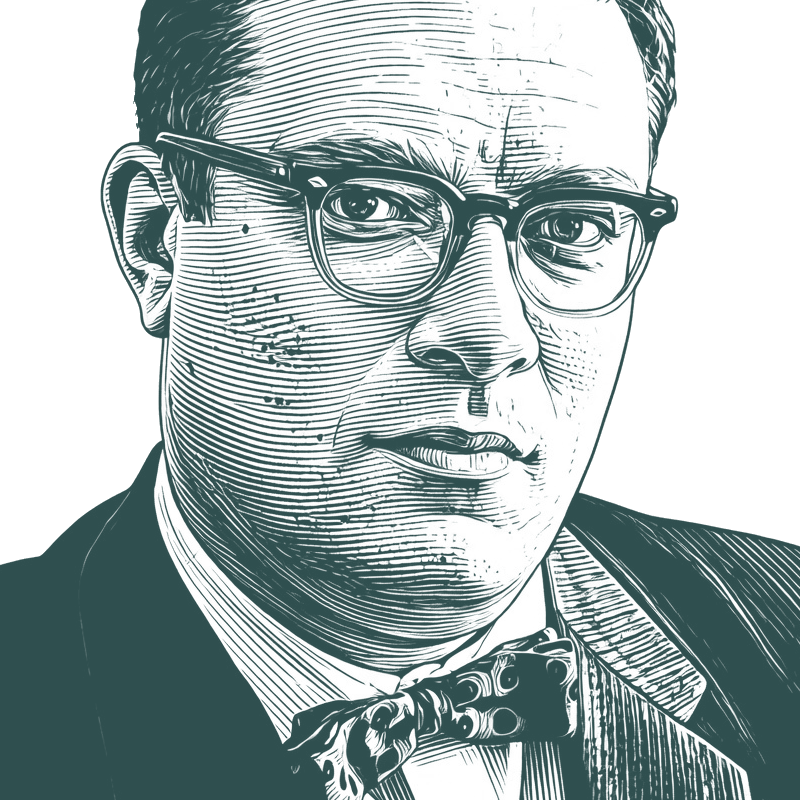
Portrait adapted from
Wikimedia Commons, Phillip Leonian [1] from New York World-Telegram & Sun.[2] (Public domain / CC0)
Also Known As
Alternative Names:
Isaak Osimov
•
Paul French
•
Asimov
•
Isaak Ozimov
•
Itzhak Ozimov
It is a difficult choice sometimes whether to feel revolted at the male sex or merely to dismiss them as contemptible.
I can't believe that," said Seldon. "I should think that new copies would be made of any record in danger of withering. How could you let knowledge disappear?" "Undesired knowledge is useless knowledge," said Dors. "Can you imagine all the time, effort, and energy expended in a continual refurbishing of unused data? And that wastage would grow steadily more extreme with time.
Now how I play a part, as an individual, in the foreseen course of history, I don't know. Perhaps I have no definite part, since the Plan leaves individuals to indeterminacy and free will. But I am important and they — they, you understand — may at least have calculated my probable reaction. So I distrust my impulses, my desires, my probable reactions.