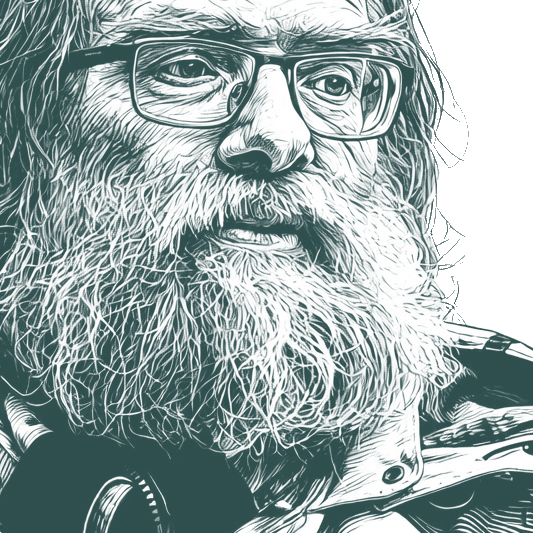
In India, by contrast, the Church is still its old aggressive self. Rather than questioning its own record, it tries to project its own crimes onto i… - Koenraad Elst
""
In India, by contrast, the Church is still its old aggressive self. Rather than questioning its own record, it tries to project its own crimes onto its heathen enemies. The Catholic Bishop's Conference of India is in no position to pontificate about anti-Semitic, anti-Muslim, anti-democratic or anti-secular sins imputed to the Hindus.
English
Collect this quote
About
Koenraad Elst
Koenraad Elst (born 7 August 1959) is a Flemish right wing Hindutva author, known primarily for his support of the Out of India theory and the Hindutva movement. Scholars have accused him of harboring Islamophobia.
Today, this reluctance to posit a central indebtedness of Indian culture to European conquerors (for that is how the Greeks ended up in India) tallies well with the Zeitgeist in the West, where the European element in every form of progress or achievement is downplayed and the contributions of others emphatically highlighted or magnified. But then again, regarding India, there is a Zeitgeist within the Zeitgeist: even within the existing ‘down with us’ atmosphere in Europe, there persists a secondary agenda borrowed mainly from India’s Nehruvian secularists, viz., belittling Hinduism.
I have written thousands of pages on that very subject, on that which outsiders call “Hindu fundamentalism”, and I have several times promised a symbolic euro if anyone could substantiate the common accusation that I, not even a Hindu, am a Hindu “fundamentalist”. That euro is still with me, so I can award it to Wallis if he finally does the job. Among civilized people, allegations come with evidence instead of with “bile” and “vitriol”. He may also try to explain away my own publications thematising specific criticisms of Hindutva. The difference with the secularist and especially the Western theses about Hindutva is that my critique is based on primary knowledge, not on hearsay from partisan sources.
Enhance Your Quote Experience
Enjoy ad-free browsing, unlimited collections, and advanced search features with Premium.
Great debaters like Yajnavalkya or Shankara would not be proud to see modern Hindus fall for anti-intellectual soundbites like “equal respect for all religions”. Very Gandhian, but logically completely untenable. For example, Christianity believes that Jesus was God’s Son while Islam teaches that he was merely God’s spokesman: if one is right, the other is wrong, and nobody has equal respect for a true and a false statement (least of all Christians and Muslims themselves). Add to this their common scapegoat Paganism, in India represented by “idolatrous” Hinduism, and the common truth of all three becomes unthinkable. It takes a permanent suspension of the power of discrimination to believe in the syrupy Gandhian syncretism which still prevails in India. The Mahatma’s outlook was neither realistic nor Indian. Not even the Jain doctrine of Anekantavada, “pluralism”, had been as mushy and anti-intellectual as the suspension of logic that is propagated in India under Gandhi’s name. It could only come about among post-Christian Westerners tired of doctrinal debates, and from their circles, Gandhi transplanted it to India.