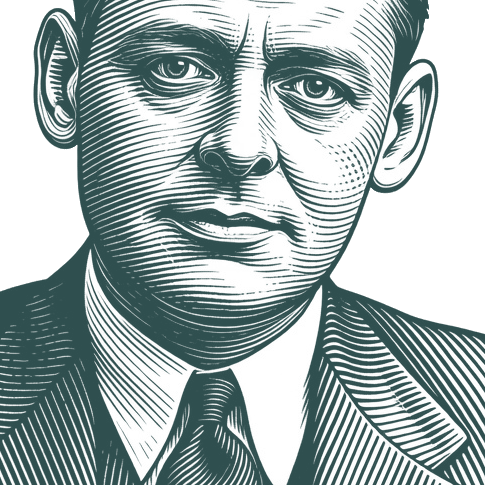
"My nerves are bad to-night. Yes, bad. Stay with me. "Speak to me. Why do you never speak. Speak. "What are you thinking of? What thinking? What? "I … - T. S. Eliot
"My nerves are bad to-night. Yes, bad. Stay with me. "Speak to me. Why do you never speak. Speak. "What are you thinking of? What thinking? What? "I never know what you are thinking. Think." I think we are in rats' alley Where the dead men lost their bones. "What is that noise?" The wind under the door. "What is that noise now? What is the wind doing?" Nothing again nothing."
English
Collect this quote
About
T. S. Eliot
Thomas Stearns Eliot (26 September 1888 – 4 January 1965) was an American-born English poet, dramatist and literary critic. Noted for spiritual and religious themes in many of his poems, he converted from Unitarianism to Anglicanism in 1927.
Biography information from
Wikiquote·
Portrait adapted from
Wikimedia Commons, Thomas Stearns Eliot with his sister and his cousin by Lady Ottoline Morrell.jpg: Lady Ottoline Morrell (1873–1938) derivative work: Octave.H (Public domain / CC0)
Also Known As
Birth Name:
Thomas Stearns Eliot
Alternative Names:
Eliot
•
T S Eliot
•
Thomas Eliot
•
T.S. Eliot
Portrait from Wikimedia Commons. Credit: Thomas Stearns Eliot with his sister and his cousin by Lady Ottoline Morrell.jpg: Lady Ottoline Morrell (1873–1938) derivative work: Octave.H. Used under Public domain / CC0. Processed and styled by Quotewise.
PREMIUM FEATURE
Advanced Search Filters
Filter search results by source, date, and more with our premium search tools.
Related quotes. More quotes will automatically load as you scroll down, or you can use the load more buttons.
Shorter versions of this quote
My nerves are bad to-night. Yes, bad. Stay with me. 'Speak to me. Why do you never speak? Speak. 'What are you thinking of? What thinking? What? 'I never know what you are thinking. Think.
A cold coming we had of it, Just the worst time of the year For a journey, and such a long journey: The ways deep and the weather sharp, The very dead of winter.
And the camels galled, sore-footed, refractory, Lying down in the melting snow. There were times we regretted The summer palaces on slopes, the terraces, And the silken girls bringing sherbet. Then the camel men cursing and grumbling And running away, and wanting their liquor and women, And the night fires going out, and the lack of shelters, And the cities hostile and the towns unfriendly And the villages dirty and charging high prices: A hard time we had of it. At the end we preferred to travel all night, Sleeping in snatches, With the voices singing in our ears, saying That this was all folly.
Then at dawn we came down to a temperate valley, Wet, below the snow line, smelling of vegetation; With a running stream and a water-mill beating the darkness, And three trees on the low sky, And an old white horse galloped away in the meadow. Then we came to a tavern with vine-leaves over the lintel, Six hands at an open door dicing for pieces of silver, And feet kicking the empty wine-skins, But there was no information, and so we continued And arrived at evening, not a moment too soon Finding the place; it was (you may say) satisfactory.
All this was a long time ago, I remember, And I would do it again, but set down This set down This: were we led all that way for Birth or Death? There was a Birth, certainly, We had evidence and no doubt. I had seen birth and death, But had thought they were different; this Birth was Hard and bitter agony for us, like Death, our death. We returned to our places, these Kingdoms, But no longer at ease here, in the old dispensation, With an alien people clutching their gods. I should be glad of another death.
the roses Had the look of flowers that are looked at.
Works in ChatGPT, Claude, or Any AI
Add semantic quote search to your AI assistant via MCP. One command setup.