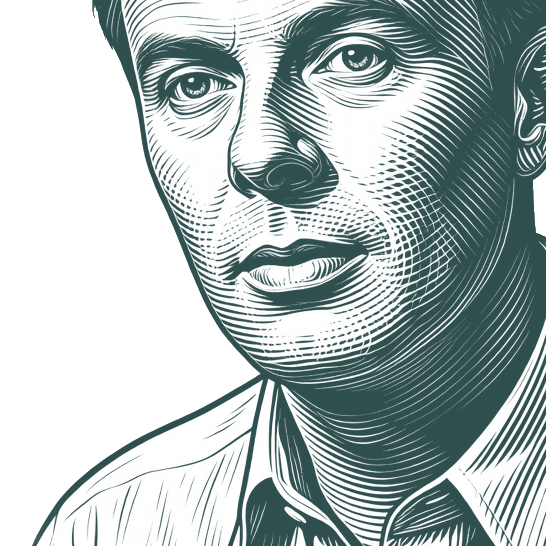
One can’t have something for nothing. Happiness has got to be paid for. You’re paying for it, Mr. Watson - paying because you happen to be too much i… - Aldous Huxley
""
One can’t have something for nothing. Happiness has got to be paid for. You’re paying for it, Mr. Watson - paying because you happen to be too much interested in beauty.
Aldous Leonard Huxley (26 July 1894 – 22 November 1963) was a British author known for his novel Brave New World. He was the grandson of Thomas Henry Huxley and younger brother of Julian Huxley.
Why do you love the woman you're in love with? Because she is. And that, after all, is God's own definition of Himself; I am that I am. The girl is who she is. Some of her isness spills over and impregnates the entire universe. Objects and events cease to be mere representations of classes and become their own uniqueness; cease to be illustrations of verbal abstractions and become fully concrete. Then you stop being in love, and the universe collapses, with an almost audible squeak of derision, into its normal insignificance.
Porque los detalles, como todos sabemos, conducen a la virtud y la felicidad, en tanto que las generalidades son intelectualmente males necesarios.
Go Premium
Support Quotewise while enjoying an ad-free experience and premium features.
The fact of shame is significant. We feel spontaneously ashamed of the body and its activities. That's a sign of the body's absolute and natural inferiority.' 'Absolute and natural rubbish!' said Rampion indignantly.'shame isn't spontaneous, to begin with. It's artificial, it's acquired. You can make people ashamed of anything. Agonizingly ashamed of wearing brown boots with a black coat, or speaking with the wrong sort of accent, or having a drop at the end of their noses. Of absolutely anything, including the body and its functions. But that particular shame's just as artificial as any other. The Christians invented it, just as the tailors in Savile Row invented the shame of wearing brown boots with a black coat. There was precious little of it before Christian times. Look at the Greeks, the Etruscans.