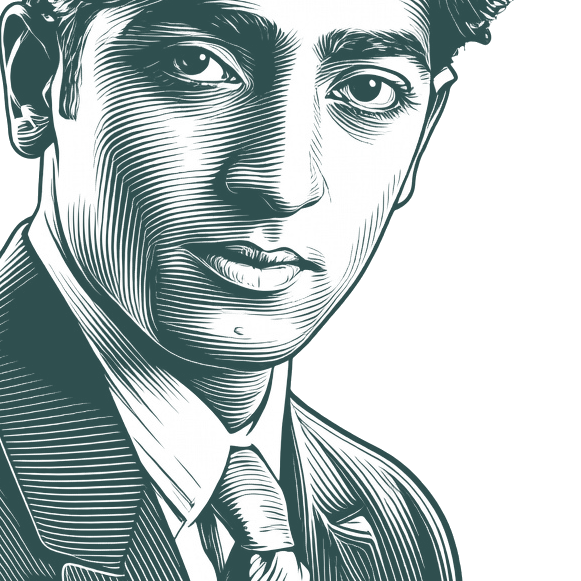
"To stand alone is to be uncorrupted, innocent, free of all tradition, of dogma, of opinion, of what another says, and so on. Such a mind does not se… - Jiddu Krishnamurti
"To stand alone is to be uncorrupted, innocent, free of all tradition, of dogma, of opinion, of what another says, and so on. Such a mind does not seek because there is nothing to seek; being free, such a mind is completely still without a want, without movement. But this state is not to be achieved; it isn't a thing that you buy through discipline; it doesn't come into being by giving up sex, or practicing a certain yoga. It comes into being only when there is understanding of the ways of the self, the 'me', which shows itself through the conscious mind in everyday activity, and also in the unconscious. What matters is to understand for oneself, not through the direction of others, the total content of consciousness, which is conditioned, which is the result of society, of religion, of various impacts, impressions, memories - to understand all that conditioning and be free of it. But there is no "how" to be free. If you ask how to be free, you are not listening."
Jiddu Krishnamurti (11 May 1895 – 17 February 1986) was a spiritual teacher, public speaker, and writer, on psychological, sociological, and spiritual subjects.
We know only fragmentarily this extraordinary thing called life; we have never looked at sorrow, except through the screen of escapes; we have never seen the beauty, the immensity of death, and we know it only through fear and sadness. There can be understanding of life, and of the significance and beauty of death, only when the mind on the instant perceives “what is”.You know, sirs, although we differentiate them, love, death, and sorrow are all the same; because, surely, love, death, and sorrow are the unknowable. The moment you know love, you have ceased to love. Love is beyond time; it has no beginning and no end, whereas knowledge has; and when you say, “I know what love is”, you don’t. You know only a sensation, a stimulus. You know the reaction to love, but that reaction is not love. In the same way, you don’t know what death is. You know only the reactions to death, and you will discover the full depth and significance of death only when the reactions have ceased.
That is the first thing to learn — not to seek. When you seek you are really only window-shopping. The question of whether or not there is a God or truth or reality, or whatever you like to call it, can never be answered by books, by priests, philosophers or saviours. Nobody and nothing can answer the question but you yourself and that is why you must know yourself. Immaturity lies only in total ignorance of self. To understand yourself is the beginning of wisdom.
It is only when the mind, which has taken shelter behind the walls of self-protection, frees itself from its own creations that there can be that exquisite reality. After all, these walls of self-protection are the creations of the mind which, conscious of its insufficiency, builds these walls of protection, and behind them takes shelter. One has built up these barriers unconsciously or consciously, and one’s mind is so crippled, bound, held, that action brings greater conflict, further disturbances. So the mere search for the solution of your problems is not going to free the mind from creating further problems. As long as this center of self-protectiveness, born of insufficiency, exists, there must be disturbances, tremendous sorrow, and pain; and you cannot free the mind of sorrow by disciplining it not to be insufficient. That is, you cannot discipline yourself, or be influenced by conditions and environment, in order not to be shallow. You say to yourself, “I am shallow; I recognize the fact, and how am I going to get rid of it?” I say, do not seek to get rid of it, which is merely a process of substitution, but become conscious, become aware of what is causing this insufficiency. You cannot compel it; you cannot force it; it cannot be influenced by an ideal, by a fear, by the pursuit of enjoyment and powers. You can find out the cause of insufficiency only through awareness. That is, by looking into environment and piercing into its significance there will be revealed the cunning subtleties of self-protection. After all, self-protection is the result of insufficiency, and as the mind has been trained, caught up in its bondage for centuries, you cannot discipline it, you cannot overcome it. If you do, you lose the significance of the deceits and subtleties of thought and emotion behind which mind has taken shelter; and to discover these subtleties you must become conscious, aware. Now to be aware is not to alter. Our mind is accustomed to alteration which is me