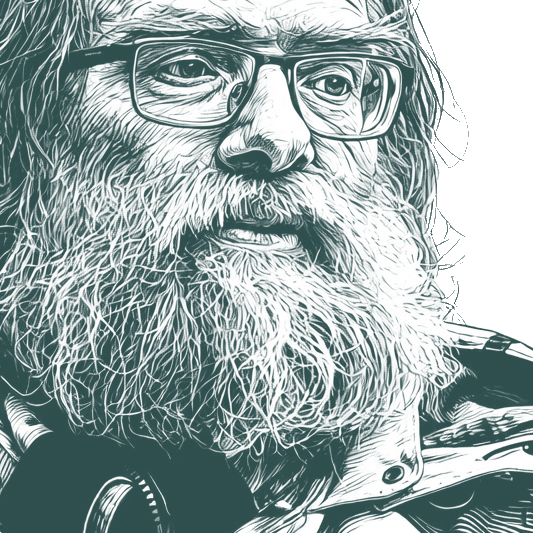
One of the more disturbing and sterile approaches which Hansen has borrowed from his secularist sources, is the tendency to psychologize, and to bury… - Koenraad Elst
""
One of the more disturbing and sterile approaches which Hansen has borrowed from his secularist sources, is the tendency to psychologize, and to bury hard facts under a cloud of psychobabble: "construct", "identities built around a threatening other", "domesticating public spaces", "myth of Hindu effeminacy".... The book contains some of the familiar tricks known from the M.J. Akbar school of Hindutva‑smearing, e.g. just as MJ Akbar once cleverly described Veer Savarkar as "a co-accused in the Mahatma murder trial" without mentioning that Savarkar was fully acquitted and not even indicted again in the appeals trial, we find Prof. Hansen casting suspicion on L.K. Advani by describing him as "indicted in a massive corruption scandal in 1996" (p.266) without mentioning that the investigation cleared him completely of the charges (which were minor, the "massive" scandal mainly pertaining to dozens of Congress secularists, as Hansen fails to explain).
Koenraad Elst (born 7 August 1959) is a Flemish right wing Hindutva author, known primarily for his support of the Out of India theory and the Hindutva movement. Scholars have accused him of harboring Islamophobia.
But meanwhile, the stark fact is that the continuous trickle of Hindu refugees from Pakistan and Bangladesh is not reciprocated by a symmetrical phenomenon of Muslim flight from India. On the contrary, even in BJP-ruled India, even in Mumbai a.k.a. Shiv Sena City, there is a continuous influx of Bangladeshi Muslim fortune-seekers. They vote with their feet to refute Mira Kamdar's alarmist stories.
We will not change the subject and discuss the large though unknown number of Hindus killed by Christian separatists in Mizoram and Nagaland over the decades, nor the terror of Christian natives in Fiji against Hindus, the latter phenomenon... is not the target of any protest in the world media, and the first is never even mentioned, so I suppose we need not attach any undue importance to the death of Hindus at the hands of Christians.
Works in ChatGPT, Claude, or Any AI
Add semantic quote search to your AI assistant via MCP. One command setup.
The VHP-employed team presented the already known documentary and archaeological evidence and dug up quite a few new documents confirming the temple demolition (including four that Muslim institutions had tried to conceal or tamper with).