One man does not assert the truth which he knows, because he feels himself bound to the people with whom he is engaged; another, because the truth mi… - Leo Tolstoy
""
One man does not assert the truth which he knows, because he feels himself bound to the people with whom he is engaged; another, because the truth might deprive him of the profitable position by which he maintains his family; a third, because he desires to attain reputation and authority, and then use them in the service of mankind; a fourth, because he does not wish to destroy old sacred traditions; a fifth, because he has no desire to offend people; a sixth, because the expression of the truth would arouse persecution, and disturb the excellent social activity to which he has devoted himself. One serves as emperor, king, minister, government functionary, or soldier, and assures himself and others that the deviation from truth indispensable to his condition is redeemed by the good he does. Another, who fulfils the duties of a spiritual pastor, does not in the depths of his soul believe all he teaches, but permits the deviation from truth in view of the good he does. A third instructs men by means of literature, and notwithstanding the silence he must observe with regard to the whole truth, in order not to stir up the government and society against himself, has no doubt as to the good he does. A fourth struggles resolutely with the existing order as revolutionist or anarchist, and is quite assured that the aims he pursues are so beneficial that the neglect of the truth, or even of the falsehood, by silence, indispensable to the success of his activity, does not destroy the utility of his work. In order that the conditions of a life contrary to the consciousness of humanity should change and be replaced by one which is in accord with it, the outworn public opinion must be superseded by a new and living one. And in order that the old outworn opinion should yield its place to the new living one, all who are conscious of the new requirements of existence should openly express them. And yet all those who are conscious of these new requirements, one in the name of one thing, and one in the name of another, not only pass them over in silence, but both by word and deed attest their exact opposites.
English
Collect this quote
About
Leo Tolstoy
Lev Nikolayevitch Tolstoy [Ле́в Никола́евич Толсто́й, usually rendered Leo Tolstoy, or sometimes Tolstoi] (9 September 1828 – 20 November 1910) was a Russian writer, philosopher and social activist (social critic), whose novels War and Peace and Anna Karenina are internationally praised classics of world literature. He was a major influence on the development of Christian anarchism and pacifism, contributing to such nonviolent resistance movements as those of Mahatma Gandhi, Martin Luther King, Jr., and James Bevel.
Biography information from
Wikiquote·
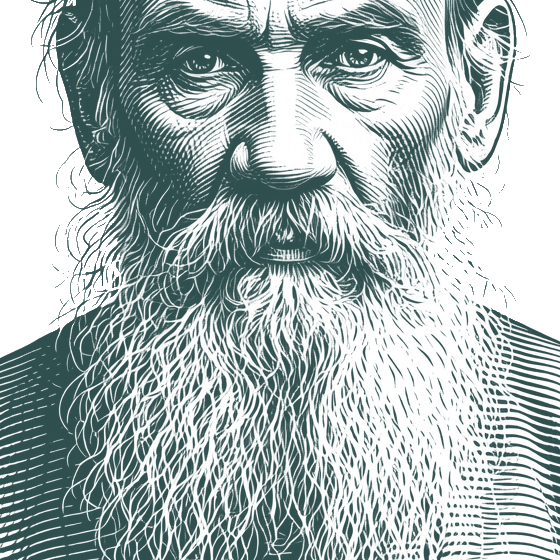
Portrait adapted from
Wikimedia Commons, Sergei Prokudin-Gorskii (Public domain / CC0)
Also Known As
Pen Names:
Л. Н. Т.
•
Л. Н.
Birth Name:
Lev Nikolayevich Tolstoy
Native Name:
Лев Никола́евич Толсто́й
Alternative Names:
Count Lev Nikolayevich Tolstoy
•
Tolstoy, Leo, graf, 1828-1910
•
Tolstoĭ, Lev Nikolaevich, graf, 1828-1910
•
Lev Nikolayevich Tolstoĭ
•
Leo Tolstoi
•
Tolstoĭ, Lev Nikolaevich, graf
•
Tolstoy, Leo, graf
"Man can be master of nothing while he fears death, but he who does not fear it possesses all. If there were no suffering, man would not know his limitations, would not know himself. The hardest thing is to be able in your soul to unite the meaning of all. To unite all? Pierre asked himself. "No, not to unite. Thoughts cannot be united, but to harness all these thoughts together is what we need! Yes, one must harness them, must harness them!
There is something so enchanting in the smile of melancholy. It is a ray of light in the darkness, a shade between sadness and despair, showing the possibility of consolation.
Works in ChatGPT, Claude, or Any AI
Add semantic quote search to your AI assistant via MCP. One command setup.
Never, never marry, my friend. Here’s my advice to you: don’t marry until you can tell yourself that you’ve done all you could, and until you’ve stopped loving the woman you’ve chosen, until you see her clearly, otherwise you’ll be cruelly and irremediably mistaken. Marry when you’re old and good for nothing…Otherwise all that’s good and lofty in you will be lost.