It is not possible, and it never will be possible, to organize all the beings occupying space into one immense confederacy. This would be ideal, but … - J. Howard Moore
""
It is not possible, and it never will be possible, to organize all the beings occupying space into one immense confederacy. This would be ideal, but from the inexorable nature of things it can never be. The denizens of the sea depths can not correlate with the inhabitants of the clouds. The lion can not fraternize with the lamb, nor the hawk with the sparrow. The natures of beings have been evolved thru war, and they are in large part irredeemably antagonistic. But the approximation, if honest, may be more successful than is supposed, and may include many species not human. The bird may contribute his song and plumage, the sheep his fleece, the horse, the ox, the elephant, and the camel their strength or speed, the cow and the fowl their secretions, the dog his fidelity, and man his art. The ultimate and ideal aggregation of the living universe will not be a pan-American union nor a Euro-American league, nor even an aggregation whose spirit is embodied in a parliament of man, but the widest and most consummate possible Confederation of the Consciousnesses.
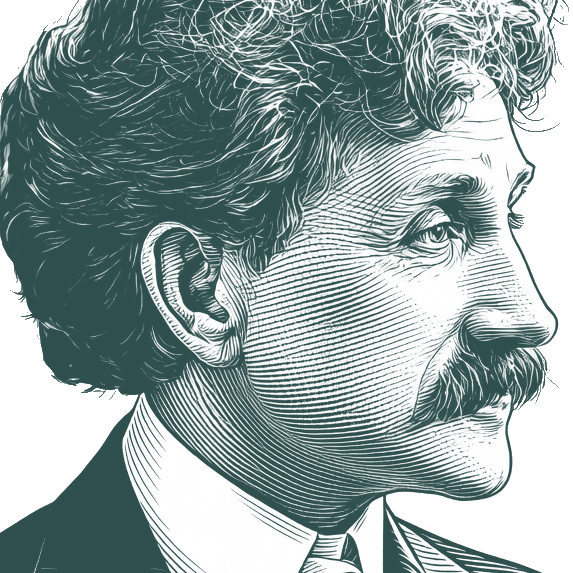
John Howard Moore (December 4, 1862 – June 17, 1916) was an American zoologist, philosopher, educator and social reformer. He advocated for the ethical consideration and treatment of animals and authored several articles, books, essays and pamphlets on topics including education, ethics, evolutionary biology, humanitarianism, utilitarianism and vegetarianism. He is best known for his work The Universal Kinship (1906), which advocated for a secular sentiocentric philosophy he called the doctrine of "Universal Kinship", based on the shared evolutionary kinship between all sentient beings.
One thing is certain, however, and that is, that the most powerful instinct of human nature, the instinct to struggle and survive, the instinct to be superior, must be destroyed or greatly subordinated before the state here outlined can be realized; for the ideal state will be practically bereft of opportunity for its satisfaction.
The earliest examples of human association were those practically of autocentricism. Each individual considered himself the only or chief end for which the universe existed. Each's own individual welfare was the end for which he struggled, and all the rest of the universe, sentient and insentient, was contemplated as means to this.
Parenthood is the gravest of all responsibilities. The act of generation is a momentous act. It should be illuminated. It should be more serious, and deliberate, and conscious. It should be far more frequently neglected. Human beings should know that it is a grave conspiracy, the conspiracy to bring into the universe a living being, an organism with lungs and responsibilities and the faculty for being affected. Would-be parents should ascertain whether or not they are undertaking the dissemination of disease and crime among future generations. For society not to know, nor care to know, and not to determine, nor care to determine, the character of purposed contributions to a new generation, would seem amazing, were we not born looking upon it. Were we accustomed to accomplished and scientific procreation, our indiscriminate somnambulism would scarce wear the aspects of sanity.