About the outspokenly partisan perspective of the book, we can be brief because no attempt is made to hide it. Thus, if we are going to discuss "demo… - Koenraad Elst
""
About the outspokenly partisan perspective of the book, we can be brief because no attempt is made to hide it. Thus, if we are going to discuss "democracy in India", it should be hard to leave the Emergency and the Sangh Parivar's opposition to it unmentioned; yet these are carefully and completely hushed up.
English
Collect this quote
About
Koenraad Elst
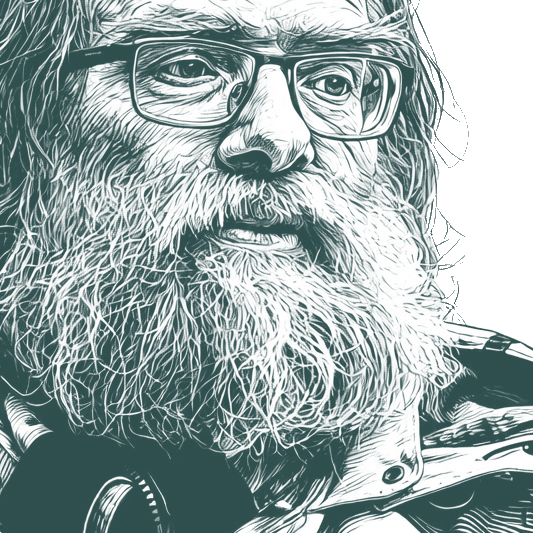
Koenraad Elst (born 7 August 1959) is a Flemish right wing Hindutva author, known primarily for his support of the Out of India theory and the Hindutva movement. Scholars have accused him of harboring Islamophobia.
It is always easy to blame the state and the men in uniform. But Islamic terror essentially does not emanate from uniforms and state power, but from a belief system which even the ordinary people have been fed. That is why a lot of Islamic terror never gets recorded by human-rights organizations like Amnesty International. A Christian Pakistani friend complained to me that Amnesty had not spoken out against the religious persecutions in his homeland, even when these are a grim and undeniable reality. The fact is that much of this persecution and discrimination is not ordered by the state (the type of culprit with which Amnesty is familiar), but is a spontaneous attitude among sections of the Muslim population, egged on by nothing except the omnipresent Islamic doctrine.
One was the shrill and intimidating campaign of history denial by a section of partisan academics and journalists, with most Western India-watchers in their pocket. Screaming “secularism in danger!” and raising the stakes beyond all proportion, they continued to dominate public discourse until at least 30 September 2010. They managed to turn the old consensus into a mere ”claim” by “Hindu extremists”. But Rajiv Gandhi tried to call their bluff.
There is one architectural argument which has not been used in the VHP evidence bundle, though it seems quite pertinent to me. The central dome of the Masjid is slightly deformed, and it is supported by a front wall that forms a sort of screen before part of the dome. The reason seems to be that the builders had to adjust the upper part of the Masjid to the walls and pillars of the pre-existing Mandir, which they were incorporating rather than razing them flat and starting totally anew.