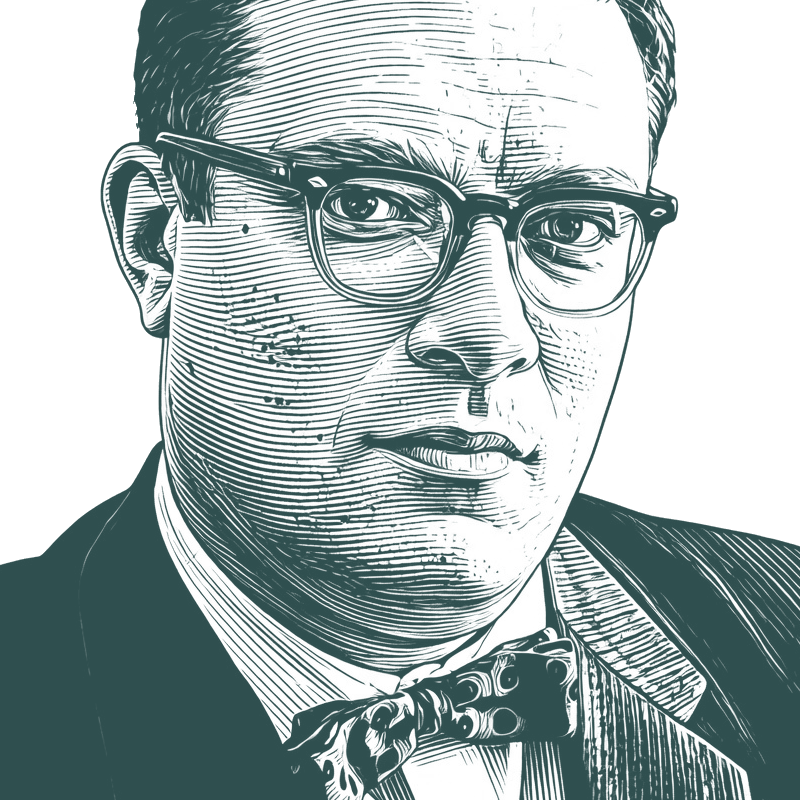
Jedes menschliche Wesen lebte hinter einer undurchdringlichen Wand aus erstickendem Nebel, in dem es allein existierte. Gelegentlich kamen undeutlich… - Isaac Asimov
""
Jedes menschliche Wesen lebte hinter einer undurchdringlichen Wand aus erstickendem Nebel, in dem es allein existierte. Gelegentlich kamen undeutliche Signale aus dem tiefen Innern der Höhle, in der ein zweiter Mensch hauste, so dass der eine nach dem anderen tasten konnte. Doch da sie sich nicht kannten und nicht fähig waren, sich zu verstehen, und es nicht wagten, sich zu vertrauen, und von frühester Kindheit an die Schrecken und die Unsicherheit dieser äußersten Isolierung erfahren hatten, herrschten die Furcht des Menschen vor dem Menschen und die wilde Grausamkeit des Menschen gegen den Menschen.
Isaac Asimov (c. 2 January 1920 – 6 April 1992) was a Russian-born American biochemist who was a prolific writer of both fiction and non-fiction, his works include the Foundation series and I, Robot.
Biography information from
Wikiquote·
Portrait adapted from
Wikimedia Commons, Phillip Leonian [1] from New York World-Telegram & Sun.[2] (Public domain / CC0)
Also Known As
Alternative Names:
Isaak Osimov
•
Paul French
•
Asimov
•
Isaak Ozimov
•
Itzhak Ozimov
Portrait from Wikimedia Commons. Credit: Phillip Leonian [1] from New York World-Telegram & Sun.[2]. Used under Public domain / CC0. Processed and styled by Quotewise.
Go Premium
Support Quotewise while enjoying an ad-free experience and premium features.
I don’t say it was deliberate fraud. He was probably madly sincere, and sincerely mad.
The word 'tradition' covered it all, as it covered so many things, some useful, some foolish.
Try QuoteGPT
Chat naturally about what you need. Each answer links back to real quotes with citations.
"And just how did you arrive at that remarkable conclusion, Mr. Mayor?"
"In a rather simple way. It merely required the use of that much-neglected commodity — common sense. You see, there is a branch of human knowledge known as symbolic logic, which can be used to prune away all sorts of clogging deadwood that clutters up human language."
"What about it?" said Fulham.
"I applied it. Among other things, I applied it to this document here. I didn't really need to for myself because I knew what it was all about, but I think I can explain it more easily to five physical scientists by symbols rather than by words."
Hardin removed a few sheets of paper from the pad under his arm and spread them out. "I didn't do this myself, by the way," he said. "Muller Holk of the Division of Logic has his name signed to the analyses, as you can see."
Pirenne leaned over the table to get a better view and Hardin continued: "The message from Anacreon was a simple problem, naturally, for the men who wrote it were men of action rather than men of words. It boils down easily and straightforwardly to the unqualified statement, when in symbols is what you see, and which in words, roughly translated is, 'You give us what we want in a week, or we take it by force.'"
There was silence as the five members of the Board ran down the line of symbols, and then Pirenne sat down and coughed uneasily.
Hardin said, "No loophole, is there, Dr. Pirenne?"