The evolution of consciousness, in its ethical import, means the extension in both space and time of the consciousness of similarity. Starting from i… - J. Howard Moore
""
The evolution of consciousness, in its ethical import, means the extension in both space and time of the consciousness of similarity. Starting from individual egoism, consciousness has extended, vividly or vaguely, from individual self to family, and from family to clan, and from clan to tribe, and from tribe to nation, and from nation to race, and from race to species, and from species to kingdom. This amplification has gone on and is still going on in both space and time. Universal consciousness of similarity contemplates all the beings in space and all those to be in time.
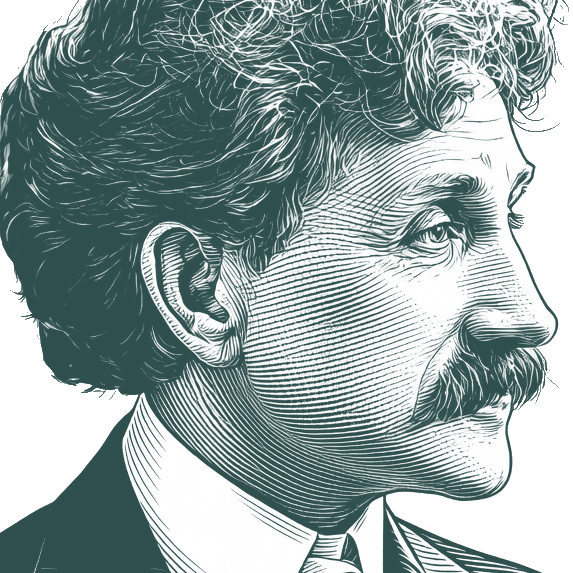
John Howard Moore (December 4, 1862 – June 17, 1916) was an American zoologist, philosopher, educator and social reformer. He advocated for the ethical consideration and treatment of animals and authored several articles, books, essays and pamphlets on topics including education, ethics, evolutionary biology, humanitarianism, utilitarianism and vegetarianism. He is best known for his work The Universal Kinship (1906), which advocated for a secular sentiocentric philosophy he called the doctrine of "Universal Kinship", based on the shared evolutionary kinship between all sentient beings.
I cannot express myself when I get to thinking about these things—these terrible crimes that man is inflicting year after year on millions of his poor, helpless brothers. I become indignant and desperate. I am ashamed of the race of beings to which I belong. It is so cruel and bigoted, so hypocritical, so soul-less and insane. I'd rather be an insect—a bee or a butterfly—and float in dim dreams among the wild flowers of summer than be a man and feel the wrongs and sufferings of this wretched world.
Ethics is the most vital and important of all sciences. It has both its theoretical and applied aspects. Its mission is nothing less than the establishment of harmony among the inhabitants of the earth and the transformation of world-wide contention into peace and happiness.
Man is not advised to sit down and fold his hands and roll his eyes piously toward the traditional source of good, and allow himself to be eaten up by tigers and ticks. And no one who reads honestly what has gone before can come to any such conclusion. Anything can be misrepresented if the one who attempts it is ingenious and determined enough. It is recognised that this is not an ideal world, and that it is impossible for any being to act among the evil as he would be able to act among the good. It is simply insisted that man shall ignore the urgings of his lower nature and do the best he can in the circumstances. Men do not and cannot act ideally toward their fellow-men, but they think they act nobly when they do the best they can. And, oh, if man would only try to be just to his fellow-races, what a different world he could make of it! If one is disposed to be wayward, it is astonishing what an array of excuses even the simpleton can scrape up in defence of himself. But if one is resolved on that higher life, ever held up to us by the better elements of our nature, it is also surprising how successful one can be, even among adverse conditions.