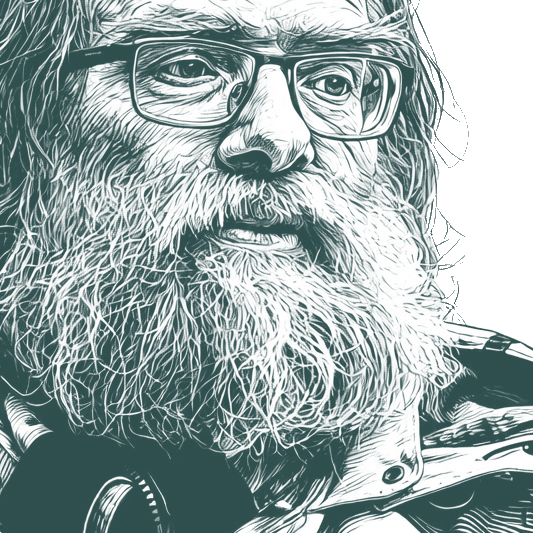
Most people who plan a building first conceive a plan and then lay foundations in a pattern dictated by the building-plan. Hindus, by contrast, are l… - Koenraad Elst
""
Most people who plan a building first conceive a plan and then lay foundations in a pattern dictated by the building-plan. Hindus, by contrast, are like perennial children playing in the sand: they put some stones in the ground here, and a few more there, then a next generation puts in a few more, all without rhyme or reason and definitely without building anything on all these buried stones, so as to keep the site empty for any incoming Muslim invaders to build their mosque on it. Fifty-three years after India adopted a Constitution which calls on all citizens to “develop the scientific temper” (Art. 51.A.h), the country’s academic positions are occupied by crackpots. ... For most human beings, it must be inconceivable to just put a pillar base into the ground once in a while, and then another one, without alignment, without any plan to make them support a preconceived building. But I suppose this has to be the secularist way of doing things.
English
Collect this quote
About
Koenraad Elst
Koenraad Elst (born 7 August 1959) is a Flemish right wing Hindutva author, known primarily for his support of the Out of India theory and the Hindutva movement. Scholars have accused him of harboring Islamophobia.
I never use the word nationalism, certainly not as a model for Hindus to adopt. Nationalism is a misstatement of Hindu concerns. It leads to misconceptions.
All the same, he paid homage to the gods on some occasions. His breakthrough to liberation was followed by an intervention of the supreme gods Brahma and Indra, asking him to share his bliss and teach his way to liberation with others – the very start of Buddhism. Had the Buddha or even the later editors of the Pali Canon been as anti-Vedic as the present neo-Buddhists imagine, they could easily have censored this episode out. At the end of his life, during which he was regularly consulted on political matters because he was after all very at home in statecraft, he was asked by the authorities of a republic to formulate the qualities by which a state prevents decline. In reply, he listed the “seven principles of non-decline”, and among them is an abiding maintenance of ancient religious traditions, including rituals and pilgrimages. The ancient religious practices which he knew, were Vedic or at any rate Hindu ones. Buddhist monks later carried Vedic gods such as Indra, Brahma, Ganapati and Saraswati to foreign lands. Japanese temples are dedicated to Benzai-ten or Saraswati, some house the “twelve Adityas/Ten”. The Shingon sect of Buddhism has a quasi-Vedic ritual called “feeding the gods”, exactly the same conception as in the Vedas. Thai and Indonesian Buddhists have adopted the cult of Rama, whom the Buddha did not really worship but whom he venerated as a great scion of the Aikshvaku lineage to which he himself belonged, and of whom he claimed to be a reincarnation. Neo-Buddhists object to the long-established Puranic teaching that both Rama and the Buddha are incarnations of Vishnu, but the germ of this teaching was planted by the Buddha himself when he claimed that Rama and he were the same person.
Works in ChatGPT, Claude, or Any AI
Add semantic quote search to your AI assistant via MCP. One command setup.
Mrs. Teesta Setalwad, is a convert from secular Hinduism to Islam, and she has the typical zeal of the convert. She was repeatedly caught in the act of lying during the secularist attempts to exploit the Gujarat riots of spring 2002. She even went on record thinking up a justification for the Muslim arson attack on the women's wagon of a pilgrims' train in Godhra, killing 58 innocent Hindus. A Muslim girl whom she had paraded as her crown witness in her culpabilization of the Gujarati Hindus, came out to accuse her of kidnapping and of coercing her to give false testimony in court. Of course, the poor girl stood no chance against Mrs. Setalwad's well-financed media machine, so she was convicted of perjury (which she at any rate committed, but more likely when initially toeing the Setalwad-dictated line than when recanting), but Mrs. Setalwad's insulted-royalty conduct during the whole controversy clearly revealed just what type of character gets attracted by the secularist hate industry. In these circumstances, I take it as a point of honour to find myself the target of criticism in her paper.