The chronological order of the books, in terms of future history (and not of publication date), is as follows: The Complete Robot (1982). This is a c… - Isaac Asimov
""
The chronological order of the books, in terms of future history (and not of publication date), is as follows: The Complete Robot (1982). This is a collection of thirty-one robot short stories published between 1940 and 1976 and includes every story in my earlier collection I, Robot (1950). Only one robot short story has been written since this collection appeared. That is
English
Collect this quote
About
Isaac Asimov
Isaac Asimov (c. 2 January 1920 – 6 April 1992) was a Russian-born American biochemist who was a prolific writer of both fiction and non-fiction, his works include the Foundation series and I, Robot.
Biography information from
Wikiquote·
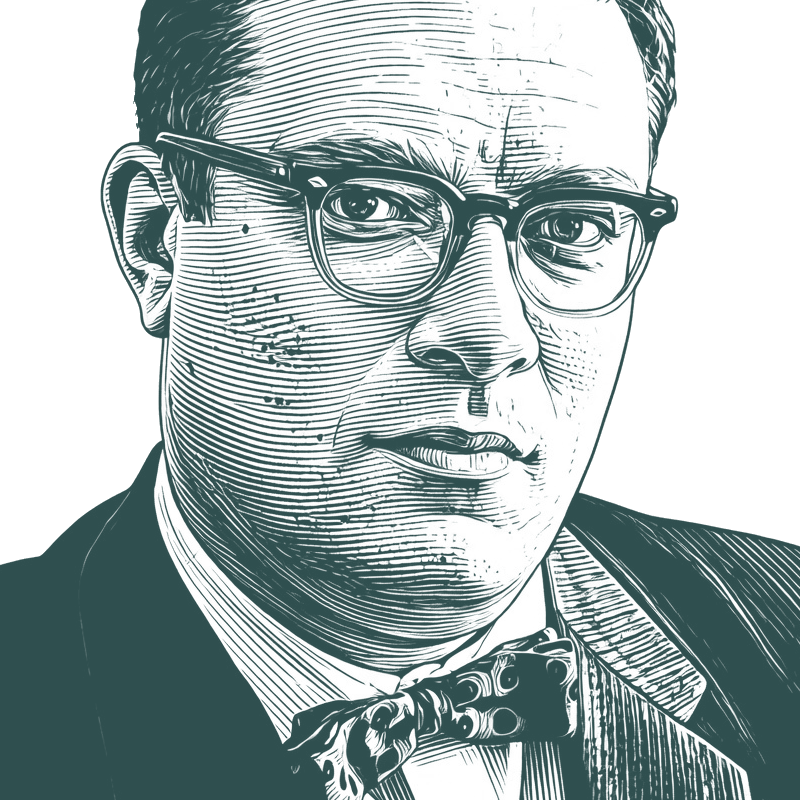
Portrait adapted from
Wikimedia Commons, Phillip Leonian [1] from New York World-Telegram & Sun.[2] (Public domain / CC0)
Also Known As
Alternative Names:
Isaak Osimov
•
Paul French
•
Asimov
•
Isaak Ozimov
•
Itzhak Ozimov
Portrait from Wikimedia Commons. Credit: Phillip Leonian [1] from New York World-Telegram & Sun.[2]. Used under Public domain / CC0. Processed and styled by Quotewise.
Enhance Your Quote Experience
Enjoy ad-free browsing, unlimited collections, and advanced search features with Premium.
Dr. Fastolfe said, with obvious surprise, "Are you satisfied with life on Earth?" "We get along."
Dors shook her head. "I can't bear to hear a human being spoken of with contempt just because of his group identification — even by other human beings. It's these respectable people here who create those hooligans out there." "And other respectable people," said Seldon, "who create these respectable people. These mutual animosities are as much a part of humanity —
Limited Time Offer
Premium members can get their quote collection automatically imported into their Quotewise collections.
For instance, in a book entitled Mathematics and the Imagination (published in 1940) the authors, Edward Kasner and James Newman, introduced a number called the "googol," which is good and large and which was promptly taken up by writers of books and articles on popular mathematics. Personally, I think it is an awful name, but the young child of one of the authors invented it, and what could a proud father do? Thus, we are afflicted forever with that baby-talk number.