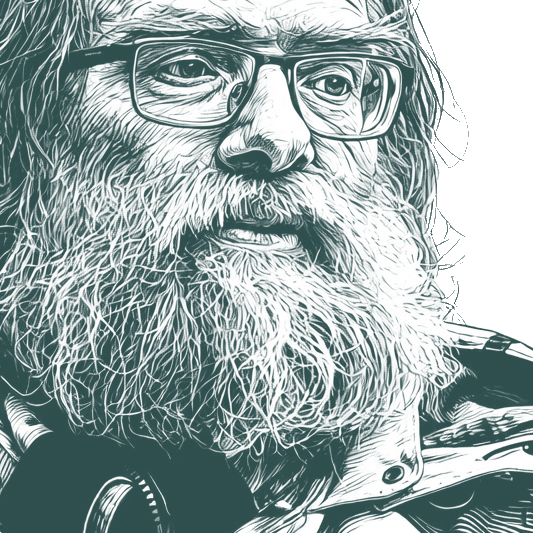
Academics are often far ahead of the rest in forging contrived explanations for simple facts, but in this case, even the meanest politician mouths th… - Koenraad Elst
""
Academics are often far ahead of the rest in forging contrived explanations for simple facts, but in this case, even the meanest politician mouths the artful delusion that 'terrorists have no religion'.”
English
Collect this quote
About
Koenraad Elst
Koenraad Elst (born 7 August 1959) is a Flemish right wing Hindutva author, known primarily for his support of the Out of India theory and the Hindutva movement. Scholars have accused him of harboring Islamophobia.
The British concoction hypothesis is not only untenable. It is so far off the mark, so totally out of tune with the known historical and cultural context, so totally unsuggested by any relevant document, that no unbiased historian would ever have come up with it. It warrants a suspicion against the pretended objectivity and scientific temper of the secularist participants in this debate... When you analyze and explicate all the implications of the secularist historians' version of the Babri Masjid story, you find that they in fact postulate a great many unusual entities. And they create them purely in the air.... This postulating of very improbable theoretical possibilities without any coherence is not really the scholarly defense of an alternative Ayodhya scenario, it is just a diversionary tactic made up to put the pro- Mandir people on the defensive. As the historian Sita Ram Goel has said, it is a typical strategy of unscrupled lawyers.... Of course, lawyers are paid by clients to try such un- truthful tactics, so we may perhaps forgive them. In the case of historians, or even for politicians claiming high ideals, this is unacceptable.
Contrary to a widespread impression, the typical victim of Hindu-Muslim violence is a Hindu. Not, of course, that this justifies any of the occasional Hindu violence, but the fact itself deserves to be noted.
Try QuoteGPT
Chat naturally about what you need. Each answer links back to real quotes with citations.
However, it is not Rajaram’s school of thought which has given political implications to the question of the geographical provenance of India’s population. As we have seen, it is precisely the AIT which has been used systematically as a xenophobic political argument against those groups considered as the progeny of the “Aryan invaders”. Even most AIT opponents subscribe to the prevalent theory that mankind probably originated in Africa, so that all Indians, like all Europeans, are ultimately immigrants. The ridiculous argument of doubting the legitimacy of a community’s presence in India on the basis of an ancestral immigration of 3500 years ago has been launched in all seriousness by interest groups wielding the AIT as their major intellectual weapon, not by the critics of the AIT.