Νεμεσσῶμαί γε μὲν οὐδὲν κλαίειν, ὅς κε θάνῃσι βροτῶν καὶ πότμον ἐπίσπῃ. τοῦτό νυ καὶ γέρας οἶον ὀϊζυροῖσι βροτοῖσι, κείρασθαί τε κόμην βαλέειν τ' ἀπὸ… - Homer

" "
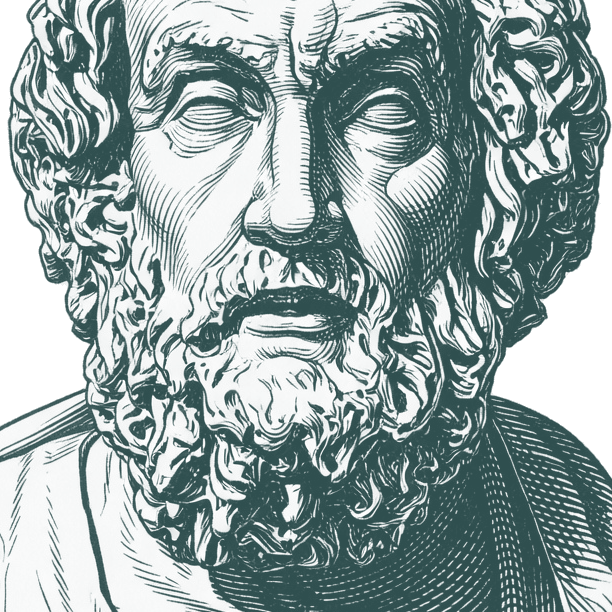
Engraved portrait of Homer

Νεμεσσῶμαί γε μὲν οὐδὲν
κλαίειν, ὅς κε θάνῃσι βροτῶν καὶ πότμον ἐπίσπῃ.
τοῦτό νυ καὶ γέρας οἶον ὀϊζυροῖσι βροτοῖσι,
κείρασθαί τε κόμην βαλέειν τ' ἀπὸ δάκρυ παρειῶν.

Greek
Collect this quote

About Homer

Homer (Ancient Greek: Ὅμηρος) is best known as the author of the Iliad and the Odyssey. He was believed by the ancient Greeks to have been the first and greatest of the epic poets. Author of the first known literature of Europe, he is central to the Western canon.

Biography information from Wikiquote · Portrait adapted from Wikimedia Commons, NikonZ7II (CC BY-SA)

Also Known As

Native Name: Ὅμηρος
Alternative Names: Homerus Homeros Mæonides

Share this quote as an image

Customize card

Unlimited Quote Collections

Organize your favorite quotes without limits. Create themed collections for every occasion with Premium.

Related quotes. More quotes will automatically load as you scroll down, or you can use the load more buttons.

Additional quotes by Homer

Question me now about all other matters, but do not ask who I am, for fear you may increase in my heart it's burden of sorrow as I think back; I am very full of grief, and I should not sit in the house of somebody else with my lamentation and wailing. It is not good to go on mourning forever.

Try QuoteGPT

Chat naturally about what you need. Each answer links back to real quotes with citations.
Ἄνδρα μοι ἔννεπε, Μοῦσα, πολύτροπον, ὃς μάλα πολλὰ
πλάγχθη, ἐπεὶ Τροίης ἱερὸν πτολίεθρον ἔπερσε·
πολλῶν δ’ ἀνθρώπων ἴδεν ἄστεα καὶ νόον ἔγνω,
πολλὰ δ’ ὅ γ’ ἐν πόντῳ πάθεν ἄλγεα ὃν κατὰ θυμόν,
ἀρνύμενος ἥν τε ψυχὴν καὶ νόστον ἑταίρων.

Loading...