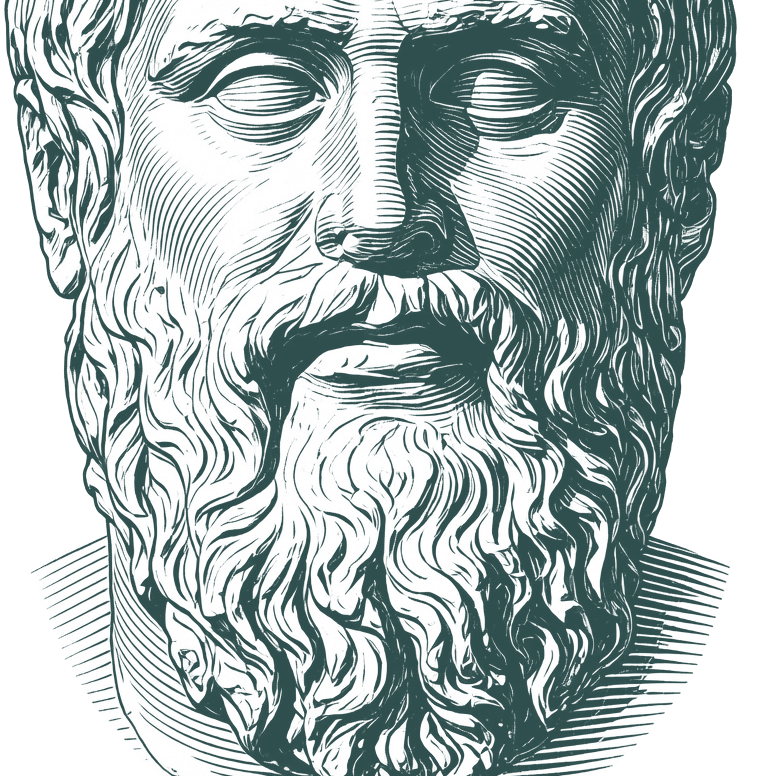
Socrates: Dear Pan and all the other Gods of this place, grant that I may be beautiful inside. Let all my external possessions be in friendly harmony… - Plato
""
Socrates: Dear Pan and all the other Gods of this place, grant that I may be beautiful inside. Let all my external possessions be in friendly harmony with what is within. May I consider the wise man rich. As for gold, let me have as much as a moderate man could bear and carry with him. Do we need anything more, Phaedrus? For me that prayer is enough. Phaedrus: Let me also share in this prayer; for friends have all things in common.
English
Collect this quote
About
Plato
Plato (Πλάτων Plátōn; c. 427 BC – c. 347 BC) was a Greek philosopher from Athens during the Classical period in Ancient Greece, founder of the Platonist school of thought and the Academy (Akademia), the first institution of higher learning in the Western world.
Related quotes. More quotes will automatically load as you scroll down, or you can use the load more buttons.
Shorter versions of this quote
O dear Pan and all the other gods of this place, grant that I may be beautiful inside. Let all my external possessions be in friendly harmony with what is within. May I consider the wise man rich. As for gold, let me have as much as a moderate man could bear and carry with him.
My opinion is: Truth must be absolute and that you Mr. Protagoras, are absolutely in error. Since this is indeed my opinion, then you must concede that it is true according to your philosophy.
Knowledge is the food of the soul; and we must take care, my friend, that the Sophist does not deceive us when he praises what he sells, like the dealers wholesale or retail who sell the food of the body; for they praise indiscriminately all their goods, without knowing what are really beneficial or hurtful.
Enhance Your Quote Experience
Enjoy ad-free browsing, unlimited collections, and advanced search features with Premium.
If men learn this, it will implant forgetfulness in their souls; they will cease to exercise memory because they rely on that which is written, calling things to remembrance no longer from within themselves, but by means of external marks. What you have discovered is a recipe not for memory, but for reminder. And it is no true wisdom that you offer your disciples, but only its semblance, for by telling them of many things without teaching them you will make them seem to know much, while for the most part they know nothing, and as men filled, not with wisdom, but with the conceit of wisdom, they will be a burden to their fellows.