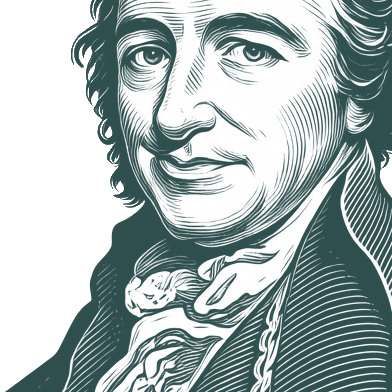
If there is a country in the world where concord, according to common calculation, would be least expected, it is America. Made up as it is of people… - Thomas Paine
""
If there is a country in the world where concord, according to common calculation, would be least expected, it is America. Made up as it is of people from different nations, accustomed to different forms and habits of government, speaking different languages, and more different in their modes of worship, it would appear that the union of such a people was impracticable; but by the simple operation of constructing government on the principles of society and the rights of man, every difficulty retires, and all the parts are brought into cordial unison. There the poor are not oppressed, the rich are not privileged. Industry is not mortified by the splendid extravagance of a court rioting at its expense. Their taxes are few, because their government is just: and as there is nothing to render them wretched, there is nothing to engender riots and tumults.
Thomas Paine (February 9, 1737 [O.S. January 29, 1736] – 8 June 1809) was a British-American political writer, theorist, and activist who had a great influence on the thoughts and ideas which led to the American Revolution and the United States Declaration of Independence. He wrote three of the most influential and controversial works of the 18th Century: Common Sense, Rights of Man, and The Age of Reason. His ideas reflected Enlightenment-era ideals of transnational human rights.
Biography information from
Wikiquote·
Portrait adapted from
Wikimedia Commons, Auguste Millière / After George Romney / After William Sharp (Public domain / CC0)
Let it be told to the future world, that in the depth of winter, when nothing but hope and virtue could survive, that the city and the country, alarmed at one common danger, came forth to meet and to repulse it.
So monstrous is the making and keeping them slaves at all, abstracted from the barbarous usage they suffer, and the many evils attending the practice; as selling husbands away from wives, children from parents, and from each other, in violation of sacred and natural ties; and opening the way for adulteries, incests, and many shocking consequences, for all of which the guilty Masters must answer to the final Judge.
Enhance Your Quote Experience
Enjoy ad-free browsing, unlimited collections, and advanced search features with Premium.
the greatest forces that can be brought into the field of revolutions, are reason and common interest. Where these can have the opportunity of acting, opposition dies with fear, or crumbles away by conviction.