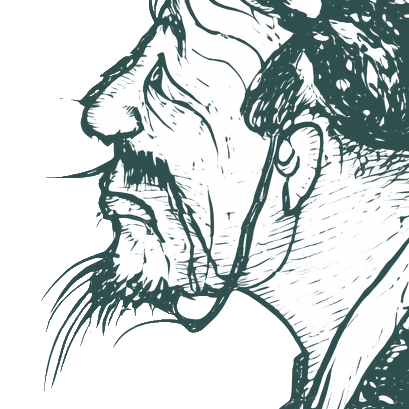
Confucius (traditionally 28 September 551 B.C. – 479 B.C.) was a Chinese social philosopher, whose teachings deeply influenced East Asian life and thought. "Confucius" is a latinization of the Chinese 孔夫子, Kong Fu Zi or K'ung-fu-tzu, literally "Master Kong", but he is usually referred to in China with a simpler version of this honorific as 孔子, Kongzi, or Kǒng Zǐ.
Biography information from
Wikiquote·
Portrait adapted from
Wikimedia Commons, Anonymous Chinese painter of the Western Han period (Public domain / CC0)
Also Known As
Native Name:
孔夫子
Alternative Names:
Confucio
•
Konfuzius
•
Cheu-kong
•
Chung-ni
•
Cong-tse
•
K'ung Chung-ni
•
K'ung Fu-tse
•
K'ung-fu-tzu
•
K'ung-tzu
•
Kong Fu Zi
•
Kong Fuzi
•
Kong Qiu
•
Kong Zhongni
•
Kongfuzi
•
Kongqiu
•
Kongzi
•
Kung Chung-ni
•
Kung Fu Tzu
•
Kung Fu-tse
•
Kungfutse
•
Zhongni
Portrait from Wikimedia Commons. Credit: Anonymous Chinese painter of the Western Han period. Used under Public domain / CC0. Processed and styled by Quotewise.
Try QuoteGPT
Chat naturally about what you need. Each answer links back to real quotes with citations.
Related quotes. More quotes will automatically load as you scroll down, or you can use the load more buttons.
The institutions of the Ruler are rooted in his own character and conduct, and sufficient attestation of them is given by the masses of the people. He examines them by comparison with those of the three kings, and finds them without mistake. He sets them up before Heaven and Earth, and finds nothing in them contrary to their mode of operation. He presents himself with them before spiritual beings, and no doubts about them arise. He is prepared to wait for the rise of a sage a hundred ages after, and has no misgivings. His presenting himself with his institutions before spiritual beings, without any doubts arising about them, shows that he knows Heaven. His being prepared, without any misgivings, to wait for the rise of a sage a hundred ages after, shows that he knows men.
The superior man has neither anxiety nor fear. When internal examination discovers nothing wrong, what is there to be anxious about, what is there to fear?
PREMIUM FEATURE
Advanced Search Filters
Filter search results by source, date, and more with our premium search tools.
The Master said, “To study, and then in a timely fashion to practice what you have learned — is this not satisfying? To have companions arrive from afar — is this not a joy? To remain unrecognized by others and yet remain free of resentment — is this not the mark of the gentleman?” (Analects 1.1)