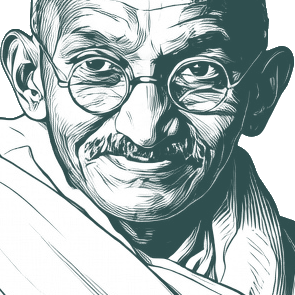
Mohandas Karamchand Gandhi (2 October 1869 – 30 January 1948) was an Indian lawyer, anti-colonial nationalist and political ethicist who employed nonviolent resistance to lead the successful campaign for India's independence from British rule, and to later inspire movements for civil rights and freedom across the world. The honorific Mahātmā (Sanskrit: "great-souled", "venerable"), first applied to him in 1914 in South Africa, is now used throughout the world.
Biography information from
Wikiquote·
Portrait adapted from
Wikimedia Commons, Elliott & Fry (Public domain / CC0)
Also Known As
Native Name:
મોહનદાસ ગાંધી
Alternative Names:
M. K. Gandhi
•
Mohandas K Gandhi
•
M K Gandhi
•
Mohandas Gandhi
•
Gandhi
•
Mohandas K. Gandhi
•
Gandhiji
•
Bapuji
•
Father of the Nation
•
Bapu
•
Mahatma Mohandas Karamchand Gandhi
•
Mohandas Karamchand Gandhi
•
MK Gandhi
It is far easier and safer to prevent illness by the observance of the laws of health than to set about curing the illness which has been brought on by our own ignorance and carelessness. Hence it is the duty of all thoughtful men to understand aright the laws of health (Introduction)
Sympathy is what you have for someone after they die, pity you have for someone when they don't have a date to the biggest dance of the year. Empathy is what I do to you when you judge me. Envy is having pity on yourself. Can you discern the rest for yourself?
Unlimited Quote Collections
Organize your favorite quotes without limits. Create themed collections for every occasion with Premium.
It is better to be violent, if there is violence in our breasts, than to put on the cloak of non-violence to cover impotence. Violence is any day preferable to impotence. There is hope for a violent man to become non-violent. There is no such hope for the impotent.