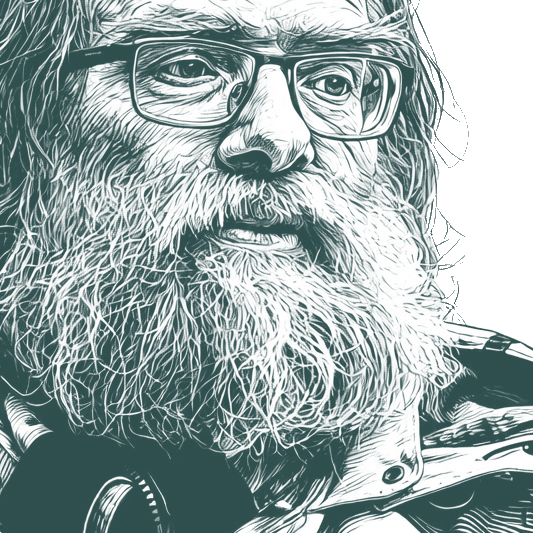
Not satisfied with denying the crimes of Islam, the negationists have recently made a big effort to spread the notion that Hinduism itself is guilty … - Koenraad Elst
""
Not satisfied with denying the crimes of Islam, the negationists have recently made a big effort to spread the notion that Hinduism itself is guilty of just the same things of which it accuses Islam.... A handful of negationist historians have tried to substantiate the allegations against Hinduism and spared no effort to collect instances of Hindus acts of persecution.
English
Collect this quote
About
Koenraad Elst
Koenraad Elst (born 7 August 1959) is a Flemish right wing Hindutva author, known primarily for his support of the Out of India theory and the Hindutva movement. Scholars have accused him of harboring Islamophobia.
That e.g. book 6 is older than book 3 may not be universally acknowledged, but that the family books predate the others is a widely shared opinion, which I learned in university in the eighties, from AIT believing-professors and before the Aryan question became an issue again. And in this scheme, the elephant is mentioned before the Afghan animals, of whom the camel is only one.
By coincidence, I met Khushwant Singh on the airplane Delhi-Frankfurt some 22 years ago. Frankly, I got a rather good personal opinion of him. It was timely that we met, because I needed to prove my existence. He had just written a newspaper column stating that my book on Ayodhya had been written by Sita Ram Goel using a European name as pseudonym to confer an air of outside objectivity on his pro-temple thesis. Well, that matter was settled then.
Enhance Your Quote Experience
Enjoy ad-free browsing, unlimited collections, and advanced search features with Premium.
A much later revolution in European thought was wrought by Immanuel Kant, who admitted the decisive influence (“awakened from my dogmatic slumber”) from David Hume’s sudden development of a quasi-Buddhist view. Hume doesn’t mention Buddhism, and would perhaps have been laughed out of court if he had, but recently we have discovered that his philosophical awakening had been triggered by his reading two detailed accounts of Buddhist thought by Catholic missionaries posted in Tibet c.q. Thailand. Thus, Gandhi was wrong to equate Hinduism with non-violence, which is extolled as a virtue on the spiritual path, but not a virtue for the warrior. No matter how the warrior class is recruited, at any rate it is deemed necessary in the real world. Hinduism is a complete system: it accounts for society’s needs as much as for the requirements of the spiritual path. Gandhi’s version of Hinduism was very unbalanced and morbidly moralistic. It ought to be a warning sign for Hindus that the secularists are so insistently dangling Gandhi as a role model before them. In Gandhi’s days, this critical role vis-à-vis Christianity and (at the cost of a number of murders) Islam was taken by the Arya Samaj, which Gandhi lambasted. His role in this regard was entirely negative, abolishing the power of discrimination in the Hindu worldview. He thus prepared the ground for the wilful superficiality characteristic of the Nehruvians. He also, through his wider influence on all Hindus, prepared the ground for the complete ideological illiteracy among RSS men, along with Golwalkar. Today in the West, nationalism has gone out of fashion; but in India, nothing ever dies, and so nationalism keeps on working its distortive influence on the movement for Hindu self-defence.