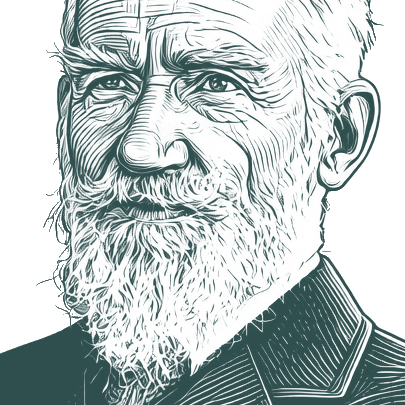
The plain working truth is that it is not only good for people to be shocked occasionally, but absolutely necessary to the progress of society that t… - George Bernard Shaw
""
The plain working truth is that it is not only good for people to be shocked occasionally, but absolutely necessary to the progress of society that they should be shocked pretty often.
George Bernard Shaw (26 July 1856 – 2 November 1950), known at his insistence simply as Bernard Shaw, was an Irish playwright, critic, polemicist and political activist with a range incorporating both contemporary satire and historical allegory. He wrote more than sixty plays, including such works as Man and Superman (1902), Pygmalion (1913) and Saint Joan (1923). Shaw was awarded the Nobel Prize in Literature in 1925.
What is life but a series of inspired follies? The difficulty is to find them to do. Never lose a chance: it doesn't come every day.
Shaw’s employment of the language proves no less self-sufficient in this uncostumed and unset “reading” of “Don Juan in Hell.” Yet there is a striking difference. Shaw has no interest in conjuring images to evoke a physical setting. He makes fun of Dante for having described hell as a place of mud, frost, filth, fire, and venomous serpents. He is equally contemptuous of Milton for having introduced cannon and gunpowder as a means of expelling the Devil from heaven. Shaw’s hell is visually nonexistent. In his own words “there is nothing; omnipresent nothing. No sky, no peaks, no light, no sound, no time nor space, utter void.” There is only somewhere the faint throbbing buzz of a Mozartian strain and a pallor which “reveals a man in the void, an incorporeal but visible man, seated, absurdly enough, on nothing.
Go Premium
Support Quotewise while enjoying an ad-free experience and premium features.
We cut the throat of a calf and hang it up by the heels to bleed to death so that our veal cutlet may be white; we nail geese to a board and cram them with food because we like the taste of liver disease; we tear birds to pieces to decorate our women's hats; we mutilate domestic animals for no reason at all except to follow an instinctively cruel fashion; and we connive at the most abominable tortures in the hope of discovering some magical cure for our own diseases by them.