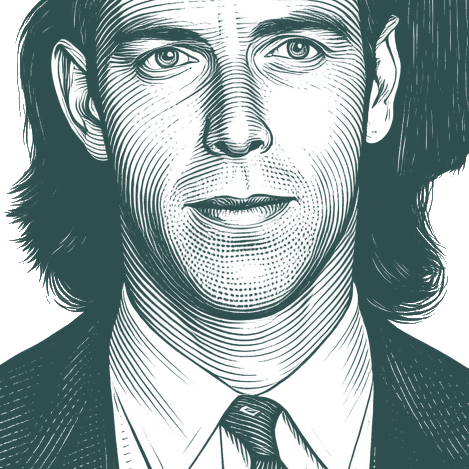
"Obviously, we try to know, name, and define fear in order to make it "objective," that is, separate from "I." But why are we trying to be separate f… - Alan Watts
"Obviously, we try to know, name, and define fear in order to make it "objective," that is, separate from "I." But why are we trying to be separate from fear? Because we are afraid. In other words, fear is trying to separate itself from fear, as if one could fight fire with fire."
English
Collect this quote
About
Alan Watts
Alan Wilson Watts (6 January 1915 – 16 November 1973) was an English philosopher, writer, speaker, and expert in comparative religion.
Biography information from
Wikiquote·
Portrait adapted from
Wikimedia Commons, The University of Vermont Alumni Magazine vol. 39 no. 01, p. 22. (Public domain / CC0)
Also Known As
Alternative Names:
Alan Wilson Watts
•
Alan W. Watts
Portrait from Wikimedia Commons. Credit: The University of Vermont Alumni Magazine vol. 39 no. 01, p. 22.. Used under Public domain / CC0. Processed and styled by Quotewise.
Works in ChatGPT, Claude, or Any AI
Add semantic quote search to your AI assistant via MCP. One command setup.
This is the whole meaning of polarity, of life implying death, of subject implying object, of man implying world, and Yes implying No. [...] Just as liberation involves the recognition of oneself in what is most other, it involves the recognition of life in death - and this is why so many rites of initiation take the neophyte through a symbolic death. He accepts the certainty of death so completely that, in effect, he is dead already - and thus beyond anxiety.
The way of Wisdom lies, therefore, in recognizing things which happen to you as your own karma — not as punishments for misdeeds or rewards for virtue (for there really is no “bad” or “good” karma), but as your own doing. For in this way you come to see that the real “you” includes both the controlled and the uncontrolled aspects of your experience.
If it is true that “when the wrong man uses the right means, the right means work in the wrong way,” it is often also true that when the right man uses the wrong means, the wrong means work in the right way.