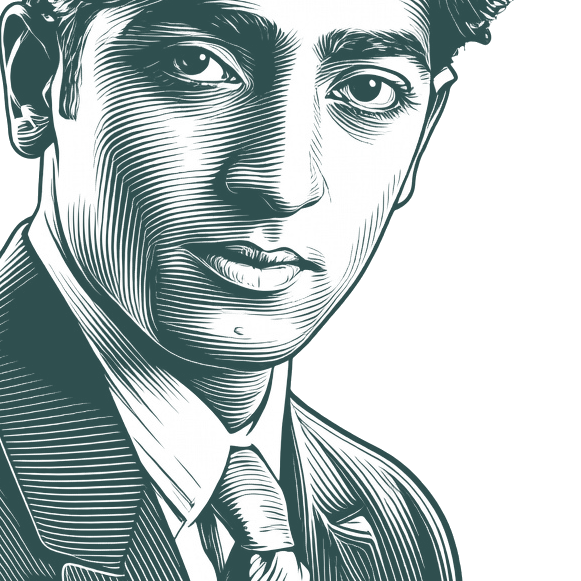
Attention involves seeing and hearing. We hear not only with our ears but also we are sensitive to the tones, the voice, to the implication of words,… - Jiddu Krishnamurti
""
Attention involves seeing and hearing. We hear not only with our ears but also we are sensitive to the tones, the voice, to the implication of words, to hear without interference, to capture instantly the depth of a sound. Sound plays an extraordinary part in our lives: the sound of thunder, a flute playing in the distance, the unheard sound of the universe; the sound of silence, the sound of one’s own heart beating; the sound of a bird and the noise of a man walking on the pavement; the waterfall. The universe is filled with sound. This sound has its own silence; all living things are involved in this sound of silence. To be attentive is to hear this silence and move with it.
Jiddu Krishnamurti (11 May 1895 – 17 February 1986) was a spiritual teacher, public speaker, and writer, on psychological, sociological, and spiritual subjects.
IN THE LIFE we generally lead there is very little solitude. Even when we are alone our lives are crowded by so many influences, so much knowledge, so many memories of so many experiences, so much anxiety, misery and conflict that our minds become duller and duller, more and more insensitive, functioning in a monotonous routine. Are we ever alone? Or are we carrying with us all the burdens of yesterday?
Find out what it means to die - not physically, that's inevitable - but to die to everything that is known, to die to your family, to your attachments, to all the things that you have accumulated, the known, the known pleasures, the known fears. Die to that every minute and you will see what it means to die so that the mind is made fresh, young, and therefore innocent, so that there is incarnation not in a next life, but the next day.
Attention is this hearing and this seeing, and this attention has no limitation, no resistance, so it is limitless. To attend implies this vast energy: it is not pinned down to a point. In this attention there is no repetitive movement; it is not mechanical. There is no question of how to maintain this attention, and when one has learnt the art of seeing and hearing, this attention can focus itself on a page, a word. In this there is no resistance which is the activity of concentration. Inattention cannot be refined into attention. To be aware of inattention is the ending of it: not that it becomes attentive. The ending has no continuity. The past modifying itself is the future — a continuity of what has been — and we find security in continuity, not in ending. So attention has no quality of continuity. Anything that continues is mechanical. The becoming is mechanical and implies time. Attention has no quality of time. All this is a tremendously complicated issue. One must gently, deeply go into it.