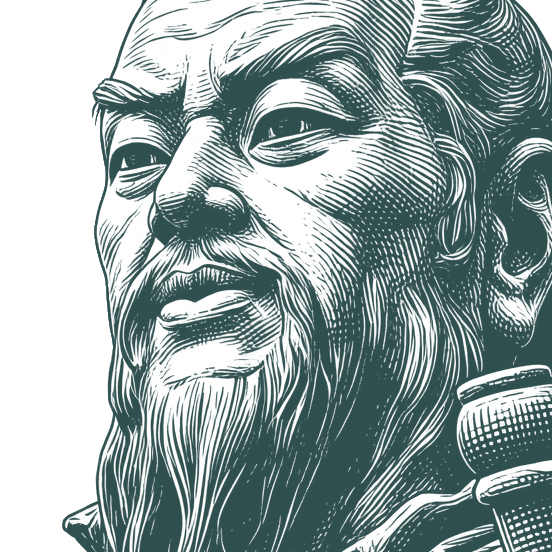
When your army has crossed the border, you should burn your boats and bridges, in order to make it clear to everybody that you have no hankering afte… - Sun Tzu
""
When your army has crossed the border, you should burn your boats and bridges, in order to make it clear to everybody that you have no hankering after home.
Sun Tzu (孫子 Sūn Zǐ; c. 6th century BC) was a Chinese general, military strategist, and philosopher who lived in the Eastern Zhou period of ancient China. Sun Tzu is traditionally credited as the author of The Art of War, a widely influential work of military strategy that has affected both Western and East Asian philosophy and military thinking. He is also known as Sun Wu (孫武; Sūn Wǔ), and Chang Qing (長卿; Cháng Qīng).
Therefore, just as water retains no constant shape, so in warfare there are no constant conditions.
Simulated disorder postulates perfect discipline, simulated fear postulates courage; simulated weakness postulates strength. Hiding order beneath the cloak of disorder is simply a question of subdivision; concealing courage under a show of timidity presupposes a fund of latent energy; masking strength with weakness is to be effected by tactical dispositions. Thus one who is skillful at keeping the enemy on the move maintains deceitful appearances, according to which the enemy will act. He sacrifices something, that the enemy may snatch at it.
Humble words and increased preparations are signs that the enemy is about to advance. Violent language and driving forward as if to the attack are signs that he will retreat.