Instead of funding issues of paper on the hypothecation of specific redeeming taxes (the only method of anticipating, in a time of war, the resources… - Thomas Jefferson
""
Instead of funding issues of paper on the hypothecation of specific redeeming taxes (the only method of anticipating, in a time of war, the resources of times of peace, tested by the experience of nations), we are trusting to tricks of jugglers on the cards, to the illusions of banking schemes for the resources of the war, and for the cure of colic to inflations of more wind.
English
Collect this quote
About
Thomas Jefferson
Thomas Jefferson (13 April 1743 – 4 July 1826) was author of the Declaration of Independence (1776) and the Virginia Statute for Religious Freedom (1777), founder of the University of Virginia (1819), the third president of the United States (1801–1809), a political philosopher, editor of Jefferson's Bible (1819), and one of the most influential founders of the United States.
Biography information from
Wikiquote·
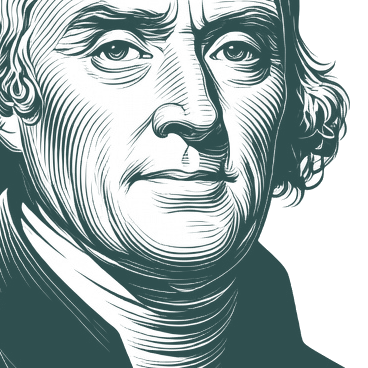
Portrait adapted from
Wikimedia Commons, Rembrandt Peale (Public domain / CC0)
Also Known As
Alternative Names:
President Jefferson
•
T. Jefferson
Man once surrendering his reason, has no remaining guard against absurdities the most monstrous, and like a ship without rudder, is the sport of every wind. With such persons, gullibility, which they call faith, takes the helm from the hand of reason, and the mind becomes a wreck.