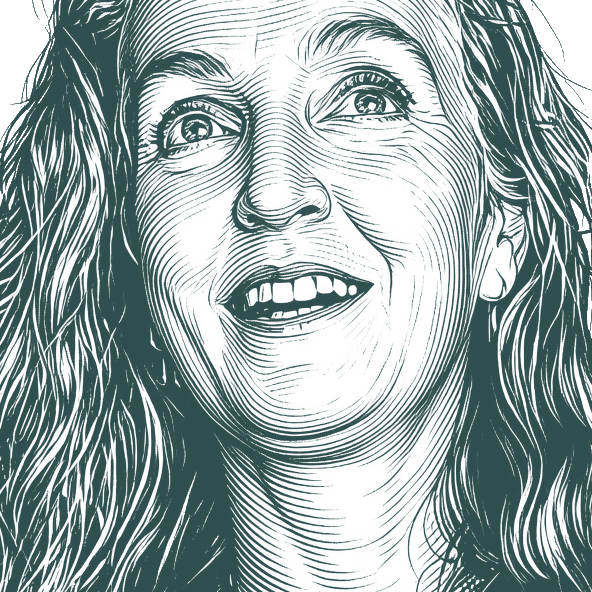
Many love stories are like the shells of hermit crabs, though others are more like chambered nautiluses, whose architecture grows with the inhabitant… - Rebecca Solnit
""
Many love stories are like the shells of hermit crabs, though others are more like chambered nautiluses, whose architecture grows with the inhabitant and whose abandoned smaller chambers are lighter than water and let them float in the sea.
Rebecca Solnit (born June 24, 1961) is an American writer. She has written on a variety of subjects, including feminism, the environment, politics, place, and art.
One of the reasons people lock onto motherhood as a key to feminine identity is the belief that children are the way to fulfill your capacity to love. But there are so many things to love besides one's own offspring, so many things that need love, so much other work love has to do in the world.
One more thing about Cassandra: in the most famous version of the myth, the disbelief with which her prophecies were met was the result of a curse placed on her by Apollo when she refused to have sex with the god. The idea that loss of credibility is tied to asserting rights over your own body was there all along. But with the real-life Cassandras among us, we can lift the curse by making up our own minds about who to believe and why.
The famous Zen parable about the master for whom, before his studies, mountains were only mountains, but during his studies mountains were no longer mountains, and afterward mountains were again mountains could be interpreted as an allegory about [the perpetual paradox that when one is closest to a destination one is also the farthest).