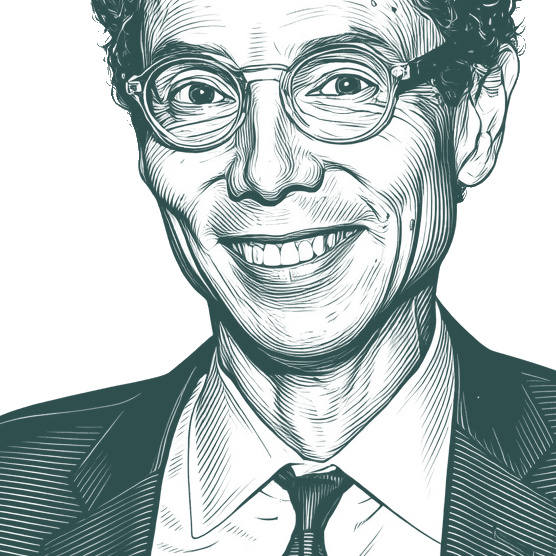
Criminals were people who operated outside social constraint. They were driven by their own dark impulses: mental illness, greed, despair, anger. Wei… - Malcolm Gladwell
""
Criminals were people who operated outside social constraint. They were driven by their own dark impulses: mental illness, greed, despair, anger. Weisburd had been taught that the best way to understand why criminals did what they did was to understand who they were. “I call it the Dracula model,” Weisburd said. “There are people and they’re like Dracula. They have to commit crime. It’s a model that says that people are so highly motivated to commit crime, nothing else really matters.” Yet if criminals were like Dracula, driven by an insatiable desire to create mayhem, they should have been roaming throughout the 72nd. The kinds of social conditions that Draculas feed on were everywhere. But the Draculas weren’t everywhere. They were only on particular streets.
English
Collect this quote
About
Malcolm Gladwell
Malcolm Timothy Gladwell (born September 3, 1963) is an English-born Canadian journalist, bestselling author, and speaker. He has been a staff writer for The New Yorker since 1996.
Biography information from
Wikiquote·
Portrait adapted from
Wikimedia Commons, PEN American Center (CC BY)
There is more courage and heroism in defying the human impulse, in taking the purposeful and painful steps to prepare for the unimaginable.
We normally think of the expressions on our face as the reflection of an inner state. I feel happy, so I smile. I feel sad, so I frown. Emotion goes inside-out. Emotional contagion, though, suggests that the opposite is also true. If I can make you smile, I can make you happy. If I can make you frown, I can make you sad. Emotion, in this sense, goes outside-in.
The people who stand before kings may look like they did it all by themselves. But in fact they are invariably the beneficiaries of hidden advantages and extraordinary opportunities and cultural legacies that allow them to learn and work hard and make sense of the world in ways others cannot. It makes a difference where and when we grew up. The culture we belong to and the legacies passed down by our forebears shape the patterns of our achievements in ways we cannot begin to imagine. It's not enough to ask what successful people are like, in other words. It is only by asking where they are from that we can unravel the logic behind who succeeds and who doesn't.