[P]erhaps the reason for this love of nonhuman nature is that communion with it restores us to a level of our own human nature at which we are still … - Alan Watts
""
[P]erhaps the reason for this love of nonhuman nature is that communion with it restores us to a level of our own human nature at which we are still sane, free from humbug, and untouched by anxieties about the meaning and purpose of our lives. For what we call 'nature' is free from a certain kind of scheming and self-importance. The birds and beasts indeed pursue their business of eating and breeding with the utmost devotion. But they do not justify it; they do not pretend that it serves higher ends, or that it makes a significant contribution to the progress of the world.
Alan Wilson Watts (6 January 1915 – 16 November 1973) was an English philosopher, writer, speaker, and expert in comparative religion.
Biography information from
Wikiquote·
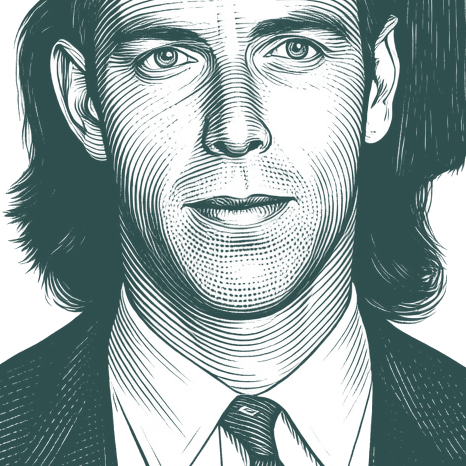
Portrait adapted from
Wikimedia Commons, The University of Vermont Alumni Magazine vol. 39 no. 01, p. 22. (Public domain / CC0)
Also Known As
Alternative Names:
Alan Wilson Watts
•
Alan W. Watts
We feel that our actions are voluntary when they follow a decision, and involuntary when they happen without decision. But if decision itself were voluntary, every decision would have to be preceded by a decision to decide–an infinite regression which fortunately does not occur. Oddly enough, if we had to decide to decide, we would not be free to decide. We are free to decide because decision “happens.” We just decide without having the faintest understanding of how we do it. In fact, it is neither voluntary nor involuntary. To “get the feel” of this relativity is to find another extraordinary transformation of our experience as a whole, which may be described in either of two ways. I feel that I am deciding everything that happens, or, I feel that everything, including my decisions, is just happening spontaneously. For a decision–the freest of my actions-just happens like hiccups inside me or like a bird singing outside me. Such a way of seeing things is vividly described by a modern Zen master, the late Sokei-an Sasaki: One day I wiped out all the notions from my mind. I gave up all desire. I discarded all the words with which I thought and stayed in quietude. I felt a little queer–as if I were being carried into something, or as if I were touching some power unknown to me … and Ztt! I entered. I lost the boundary of my physical body. I had my skin, of course, but I felt I was standing in the center of the cosmos. I spoke, but my words had lost their meaning. I saw people coming towards me, but all were the same man. All were myself! I had never known this world. I had believed that I was created, but now I must change my opinion: I was never created; I was the cosmos; no individual Mr. Sasaki existed.7 It would seem, then, that to get rid of the subjective distinction between “me” and “my experience”–through seeing that my idea of myself is not myself–is to discover the actual relationship between myself and the “outside” world. The individual, on the one hand, a
There is, then, an analogy–and perhaps more than mere analogy–between central vision and conscious, one-at-a-time thinking, and between peripheral vision and the rather mysterious process which enables us to regulate the incredible complexity of our bodies without thinking at all. It should be noted, further, that we call our bodies complex as a result of trying to understand them in terms of linear thought, of words and concepts. But the complexity is not so much in our bodies as in the task of trying to understand them by this means of thinking.
Problems that remain persistently insoluble should always be suspected as questions asked in the wrong way