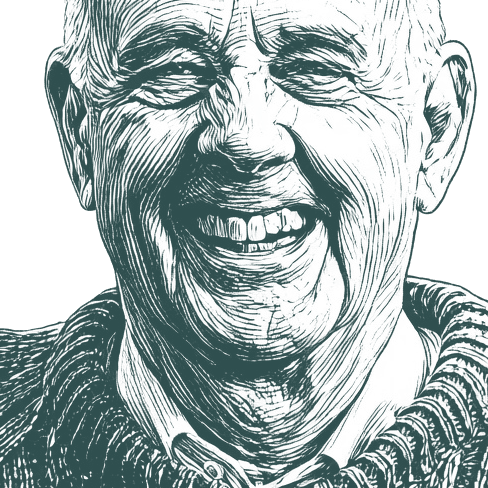
He was lonely because he could imagine himself as anything but himself and as anywhere but where he was. His competitiveness and self-centeredness cu… - Wendell Berry
""
He was lonely because he could imagine himself as anything but himself and as anywhere but where he was. His competitiveness and self-centeredness cut him off from any thought of shared life. He wanted to have more because he thought that having more would make him able to live more, and he was lonely because he never thought of the sources, the places, where he was going to get what he wanted to have, or of what his having it might cost others. It was loneliness that sometimes even he felt; you could see it. A self-praiser has got to accept a big loneliness in order to accept a little credit.
Individualism is going around these days in uniform, handing out the party line on individualism.
For the sake of “job creation,” in Kentucky, and in other backward states, we have lavished public money on corporations that come in and stay only so long as they can exploit people here more cheaply than elsewhere. The general purpose of the present economy is to exploit, not to foster or conserve. (from 'Compromise, Hell!' published in the November/December 2004 issue of ORION magazine)
Enhance Your Quote Experience
Enjoy ad-free browsing, unlimited collections, and advanced search features with Premium.
"What can turn us from this deserted future, back into the sphere of our being, the great dance that joins us to our home, to each other and to other creatures, to the dead and unborn? I think it is love. I am perforce aware how baldly and embarrassingly that word now lies on the page — for we have learned at once to overuse it, abuse it, and hold it in suspicion. But I do not mean any kind of abstract love (adolescent, romantic, or "religious"), which is probably a contradiction in terms, but particular love for particular things, places, creatures, and people, requiring stands, acts, showing its successes and failures in practical or tangible effects. And it implies a responsibility just as particular, not grim or merely dutiful, but rising out of generosity. I think that this sort of love defines the effective range of human intelligence, the range within its works can be dependably beneficent. Only the action that is moved by love for the good at hand has the hope of being responsible and generous. Desire for the future produces words that cannot be stood by. But love makes language exact, because one loves only what one knows."